The cheque has spent two decades being declared dead, and two decades of obituaries have not killed it. In the United States, commercial checks collected through the Federal Reserve still numbered 2.8 billion items in 2025, worth an average of $2,908 each — nearly $8.1 trillion in value. In the United Kingdom, cheques are down to a fraction of consumer payments but still clear almost 80 million items a year through the Image Clearing System. A business that accepts or issues cheques therefore still needs a working process: issuance controls, deposit preparation, verification against fraud, and reconciliation. This guide maps that workflow end to end and identifies where equipment still earns its place.

What the Numbers Actually Say
The decline is real, and the value concentration is real too. The two facts are not in tension — as consumer cheque usage collapsed, business and government usage persisted, so the average cheque got bigger and the item got rarer. The Federal Reserve’s annual series on commercial checks collected tells the story compactly:
| Year | Commercial checks collected (million items) | Year-over-year change | Average value per check |
|---|---|---|---|
| 2023 | 3,146 | −6.7% | $2,685 |
| 2024 | 2,978 | −5.4% | $2,745 |
| 2025 | 2,796 | −6.1% | $2,908 |
Source: Federal Reserve, Commercial Checks Collected — Annual Data. Average value per check rose even as volume fell, consistent with cheques concentrating in high-value business payments.
In the UK, Pay.UK’s Image Clearing System figures show annual cheque volume falling from 152.85 million items in 2021 to 78.71 million in 2025 — a decline of roughly 49% in four years. UK Finance’s 2025 payments market report puts cheques at just 0.2% of all payments, with use concentrated among older consumers and specific business contexts. Suppliers such as Cummins Allison have responded by repositioning their cheque-focused products toward the back-office segments that remain. The strategic conclusion for any business in cheque-accepting markets: plan for decline, but build the process for the volume that persists.
Where Cheques Still Concentrate
Cheques survive where payment is infrequent, high-value and approval-heavy. Four segments dominate residual volume:
- Business-to-business invoices and supplier payments, where approval workflows and accounting integrations still route through paper cheques in many markets.
- Government disbursements and refunds, constrained by procurement and legacy systems.
- Charity and event collections, where the paper cheque retains a ceremonial and record-keeping role — and where international cheques from abroad are a recurring reality.
- Markets where banking infrastructure limits digital alternatives, notably parts of South Asia, Africa and Latin America, where cheque acceptance remains a normal retail and trade practice.
Each segment shapes the workflow differently. A payroll office issuing hundreds of cheques weekly needs different equipment than a charity that receives ten large donation cheques a month — but both need the same underlying controls.
The End-to-End Workflow
Cheque processing has five stages, and equipment failures at any one of them propagate downstream.
Stage 1: Issuance and Print Control
For a business that issues cheques, the risk starts at the printer. Blank cheque stock is a fraud target precisely because it becomes money when filled in. A dedicated cheque writer prints payee, amount and date — often in MICR or clear embossed characters — directly onto the cheque at the point of authorization, eliminating handwritten alterations. Choosing between device classes is covered in detail in our comparison of cheque writers and MICR printers; the short version is that a compact writer such as the DB310 class suits counter issuance of moderate volumes, while integrated printing through accounting software suits high-volume payroll runs. Either way, the control principle is identical: no blank cheques lying in trays, and every printed cheque recorded at print time.
Stage 2: Receipt and Verification
A business receiving cheques faces a different fraud than the one issuing them. The Association for Financial Professionals’ 2024 survey found 63% of organizations experienced attempted or actual check fraud — making cheques, year after year, the most-targeted payment method in corporate finance. The dominant attacks are counterfeit cheques, altered payee or amount fields, and washed cheques where chemicals remove ink from a genuine instrument. Verification at receipt means checking paper stock and security features, confirming printed-field integrity, and treating unexpected large-value cheques — especially from new counterparties — with a hold-and-verify procedure rather than immediate deposit.
Stage 3: Deposit Preparation
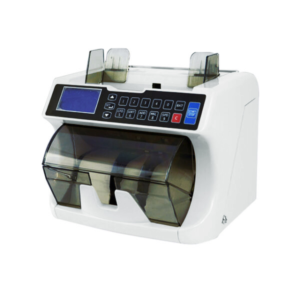
When cheques and cash go to the bank together, the deposit must be itemized: cheques listed per item or per bundle, cash counted and packaged to the bank’s standard. This is mundane work where most deposit errors are born. A banknote counter with batching — heavy-duty models in the DB3000 class handle the mixed cash-and-cheque deposit preparation that high-volume counters produce — produces currency bundles the bank accepts without a manual recount, and consistent cheque listing practices produce deposit records the bank can match item for item. Businesses that prepare deposits to a fixed standard report fewer short-finding disputes and faster credit confirmation.
Stage 4: Clearing and Presentment
Since cheque imaging became the clearing standard — the US under Check 21, the UK through the Image Clearing System — the physical cheque no longer travels bank to bank. The depositing bank images the item and transmits it; funds availability windows shortened accordingly in most markets. For the business, this stage is mostly invisible, but it has one practical consequence: the image is the legal record, so the quality of the original cheque — print contrast, intact security features, clean paper — directly affects clearing success. A cheque that images poorly invites returns.
Stage 5: Reconciliation and Returns Handling
The final stage is where most businesses are weakest: matching issued cheques to cleared items, chasing stale-dated outstanding cheques, and handling returned items. Fraud discovered here is discovered late. A weekly reconciliation habit — issued list against cleared list, variances investigated within the week — converts the returns process from a surprise into a routine. Organizations with cheque-heavy exposure increasingly automate this matching; the equipment investment is modest compared to the fraud losses it catches.

Regional Differences Worth Knowing
The workflow above is universal, but its emphasis shifts by market. In the US, high average values and the persistent B2B base mean deposit holds and fraud verification dominate — many banks extend availability windows for large or out-of-state cheques, and businesses that need same-day liquidity plan around that reality. In the UK, image clearing and the reduced cheque guarantee culture mean the receipt-and-verify step is lighter, but charity and legacy payments still require an orderly intake process. In South Asian, Middle Eastern and African markets, where cheque acceptance remains routine in trade, the issuance side carries more weight: post-dated cheques are a common commercial instrument, which makes issuance records and maturity tracking a core accounting function rather than a fraud nicety. Businesses operating across these markets should map their cheque process per country rather than forcing one global procedure — the failure modes differ even when the equipment does not.
Fraud Pressure: Why the Process, Not Just the Machine, Matters
The AFP survey figure above deserves context: cheque fraud persists because cheques are the one payment instrument where the payer’s account details sit physically in the payee’s hands. Counterfeit cheque scams — where a victim is paid with a genuine-looking cheque and asked to return funds before it bounces — remain among the most common consumer frauds reported to regulators. For businesses, the two defenses that actually work are procedural: verify before value changes hands, and reconcile cleared items against issued records every week. Equipment supports both — a cheque writer that prints embossed, unalterable fields closes the alteration channel at issuance; a count-and-batch discipline at deposit keeps the records clean enough for reconciliation to catch anything else.
Equipment Checklist for a Cheque-Handling Business
Not every business needs every item. Match the list to your actual volume and segment:
- Cheque writer or MICR printer — mandatory for issuers. Look for embossed or MICR output, a security-cleared display, and a print log. Compact units like the DB310 handle counter issuance; software-integrated printing suits payroll volume.
- Banknote counter with UV/MG detection — for deposit preparation wherever cheques and cash mix. Speed matters less than consistent batching and counterfeit flags on the cash portion of deposits.
- Forgery detection lamp (UV/magnification) — for receivers of high-value cheques, a manual verification step on large or unusual items before deposit. Verification takes seconds; a washed cheque costs the full face value.
- Deposit documentation standard — not equipment, but treat it as such: fixed cheque listing format, per-item records, and two-person sign-off above a value threshold you set.
- Weekly reconciliation routine — issued-vs-cleared matching with a named owner. This is the control that catches what everything upstream missed.
- Blank cheque stock security — locked storage, sequential stock numbering, and usage logs. Most cheque fraud starts with stolen or loose blank stock rather than clever forgery.
Cheque volumes will keep falling. What remains will keep being valuable — and the businesses handling that remainder with disciplined processing will keep the fraud losses and deposit disputes that their competitors absorb. The workflow above is the whole of it: control issuance, verify receipt, standardize deposits, reconcile weekly, and let equipment do the counting.