A currency exchange bureau earns its living on the spread between a buy rate and a sell rate. That margin is thin, and it assumes every note that crosses the counter is genuine and countable. When a teller accepts a suspect note from a walk-in customer, the loss lands directly on the bureau’s own books; when the bureau hands out a poor-quality or counterfeit note from its float, the reputational and regulatory damage is usually worse than the cash loss itself. Equipment choices at an exchange business are therefore risk decisions first and productivity decisions second.
The physical currency business is a small but persistent corner of the global foreign exchange market. According to the Bank for International Settlements, trading in global FX markets reached an average of $9.6 trillion per day in April 2025, up 28% from the 2022 survey. The overwhelming majority of that turnover is electronic. But behind the interbank screens sits a large population of licensed exchange houses, airport kiosks and money-service businesses that settle physical banknotes across borders every day — and they carry risks no electronic desk ever faces.
Why an Exchange Counter Is Not a Retail Checkout
A supermarket cash office handles one currency, mostly fresh from the bank, and mostly deposits it outward. A bureau de change does the opposite: it buys foreign currency from the public in unpredictable mixes, keeps that inventory until a wholesaler or bank collects it, and sells currency back to customers who expect crisp, verified notes. Three consequences follow.
Two-directional counterfeit exposure. In retail, the teller mostly defends against inbound fakes in the local currency. An exchange teller must defend against inbound fakes in a dozen currencies, many of which staff have never handled in volume. The 200-series euro note, the updated US dollar designs, polymer notes from several Commonwealth countries — a counter that sees occasional traffic in each cannot rely on familiarity.
Old series and worn notes. Customers do not carry fresh bundles. They carry notes folded in wallets for years, sometimes series that have been withdrawn from circulation in their home market. A machine whose currency templates have not been updated will reject valid notes, which frustrates customers and slows the queue; a machine with no proper reject handling will miscount, which corrupts the position record.
Regulatory framing. In the United States, a currency exchanger is typically a money services business under the Bank Secrecy Act, and registration is required under 31 CFR 1022.380. Currency transactions above $10,000 by (or with) a customer trigger reporting and recordkeeping obligations under 31 CFR 1010.311. Comparable regimes exist across the Gulf, Southeast Asia and Europe: the Saudi central bank’s published requirements for exchange houses, for example, call for modern counting and sorting machines capable of detecting counterfeit currency, together with staff training and prompt counterfeit reporting. The common thread is that a bureau’s machines are expected to support its records, not just its counting.
The Currency Mix: What Actually Crosses the Counter
Every bureau’s book is shaped by its corridors — an airport desk near a resort city, a border-town exchanger, and a remittance-heavy neighborhood see very different traffic. The global reference point still comes from the BIS Triennial Survey, which shows where the world’s money flows and therefore which notes dominate physical flows between corridors.
| Currency | Share of global FX turnover (April 2025) | Practical note for exchange counters |
|---|---|---|
| US dollar (USD) | On one side of 89% of all trades | Deepest counterfeit variety worldwide; every counter must know all current series |
| Euro (EUR) | 28.9% | Europa-series notes; ECB publishes counterfeit statistics quarterly |
| Japanese yen (JPY) | 16.8% | New F-series notes from 2024 require template updates |
| Pound sterling (GBP) | 10.2% | Fully polymer; UV behavior differs from paper notes |
Source: BIS Triennial Central Bank Survey, September 2025 press release. Shares relate to OTC FX turnover, not physical note volumes, but they indicate which currencies dominate cross-border flows.
For a bureau, the takeaway is that USD, EUR, GBP and JPY coverage is the baseline; regional corridors add Gulf currencies, regional remittance currencies and tourist currencies on top. A machine that supports only five currencies out of the box is a compromise every operator should price honestly.
Counterfeit Exposure: What the Data Shows
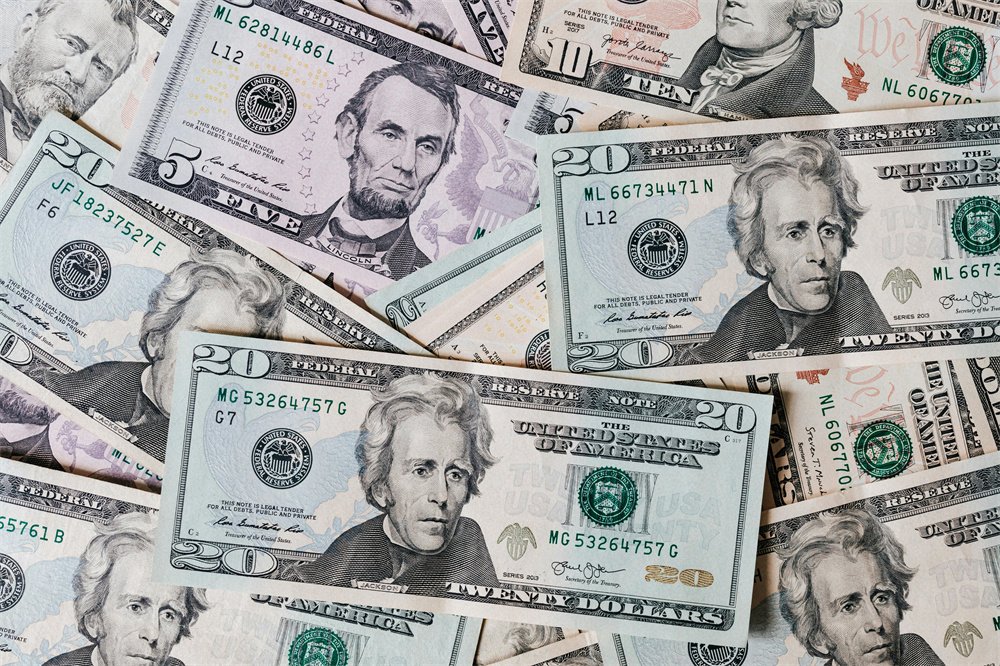
The European Central Bank publishes the most consistent public statistics on banknote counterfeiting. In its February 2026 press release covering 2025 data, the ECB reported that around 444,000 counterfeit euro banknotes were withdrawn from circulation, equivalent to roughly 14 counterfeits per million genuine notes in circulation, down about 20% from 2024. In the United States, the Secret Service identifies the $20 as the most frequently counterfeited denomination, and notes with altered designs accounted for about 10.4% of reported counterfeits in recent reporting.
The denomination breakdown matters for equipment decisions. Mid-denominations dominate because they combine value with low scrutiny:
| Denomination | Share of counterfeit euro notes reported (2025) |
|---|---|
| €5 | 1.4% |
| €10 | 6.4% |
| €20 | 27.0% |
| €50 | 53.2% |
| €100 | 7.9% |
| €200 | 3.3% |
| €500 | 0.8% |
Source: ECB press release, 27 February 2026, covering counterfeit data for 2025. Around 80% of reported counterfeits were €20 and €50 notes, and 96.8% were found in euro-area countries.
The pattern is consistent year after year: the €20 and €50, and by analogy the US $20, are where criminal effort concentrates. Exchange counters that single-check only large denominations are guarding the wrong door.
The Equipment Stack, Machine by Machine
A functional exchange bureau does not need one perfect machine; it needs a small stack of machines whose weaknesses compensate for each other. The following describes the roles rather than any particular brand.
Multi-Currency Banknote Counter with a Reject Pocket
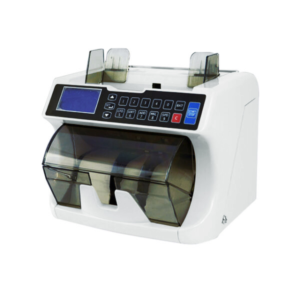
This is the workhorse. It counts the customer’s notes, denominates and verifies them, and drops anything it cannot classify into a reject pocket without stopping the count. Three capabilities separate exchange-grade machines from retail-grade ones:
- Currency identification and multi-currency counting. The machine should recognize the currency and denomination automatically and switch its verification rules accordingly, so a mixed USD/EUR tray can be processed without pre-sorting.
- A real reject pocket. Worn, taped, foreign and suspect notes are routine at an exchange. A machine that stops on every rejection turns one difficult customer into a queue; a reject pocket keeps the count moving and gives the teller a defined place to re-check.
- Serial number capture. Reading serial numbers on suspect or high-value notes ties a physical note to a transaction record. When a counterfeit is discovered later, the transaction and the teller are identifiable — which is exactly what record-based regulators expect.
Counting speeds in this class typically range from several hundred to over 1,000 notes per minute. Manufacturers such as Cummins Allison position their products by speed and sensor coverage; buyers should treat headline speed as a starting point rather than a decision criterion, because verification intensity — how many sensors fire on every note — costs speed and buys safety. Machines in the DB780A class, for example, offer selectable speeds from 600 to 1,600 notes per minute with optional UV, IR, MG, MT, size and double-note detection, which lets an operator trade speed against detection depth in real time rather than buying two machines.
Single-Note Verifiers for High-Value Checks
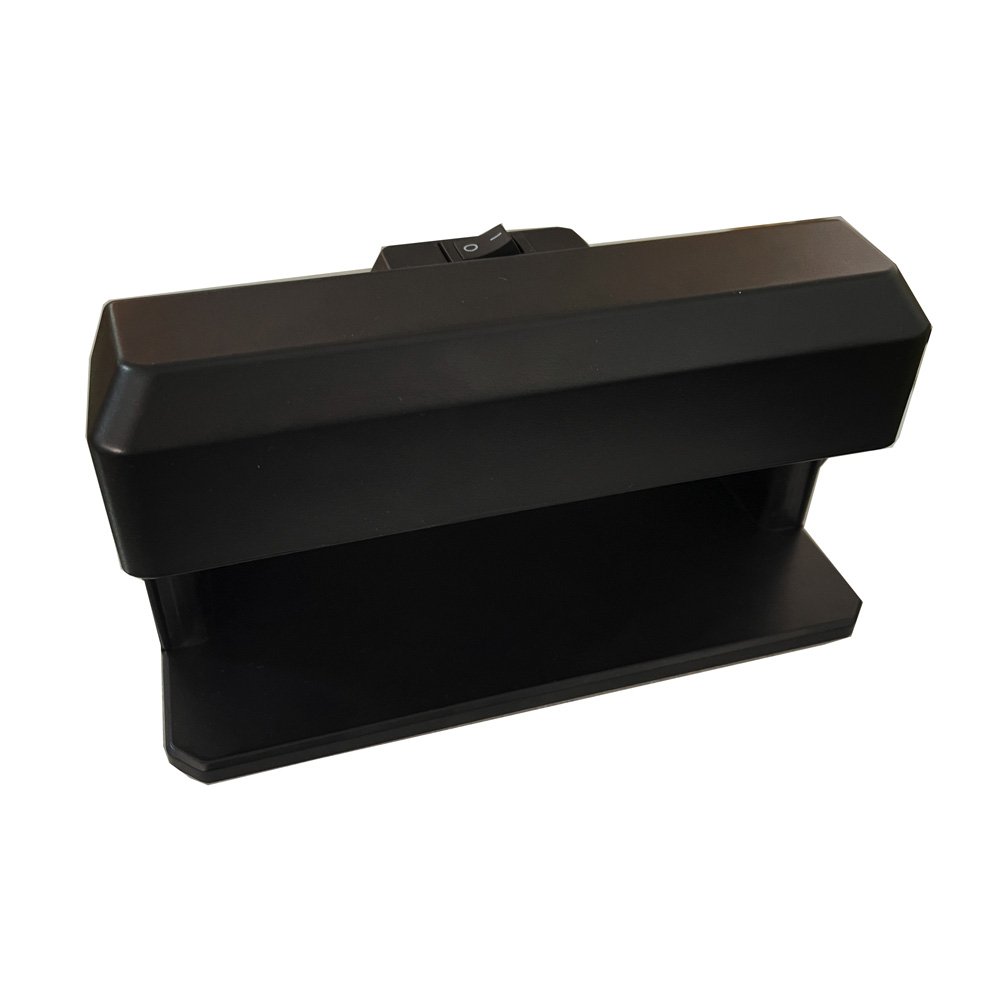
No counting machine inspects a note as thoroughly as a purpose-built verifier working at one note per second. For bureaus that regularly transact €100 and above, £50, CHF 200 or $100, a compact detector with UV, magnetic, infrared and watermark checks is the tool tellers reach for when a count flags something. In LED models such as the DB017 class or the DB326 class, the workflow is manual but fast: flap the note into the holder, check the printed feature indicators, decide. This is also where the “altered design” category matters — a genuine lower-denomination note bleached and reprinted as a higher one can pass a simple UV test, so the verifier should check features that survive washing: watermark position, security thread, intaglio feel, infrared absorption.
Back Office: Sorting, Fitness and Settlement
At settlement time, the bureau’s accumulated inventory goes to a wholesaler or bank. Notes that arrive outside fitness standards get rejected, and rejections at deposit time cost money twice — once in the delivery, once in the re-handling. The US Federal Reserve publishes explicit fitness guidelines with denomination-specific thresholds, and the Eurosystem’s banknote recycling framework defines fitness classes that machines must sort to if they handle banknote processing at scale. An exchange house that pre-sorts by fitness, orientation and denomination before settlement typically gets faster acceptance and fewer disputed counts. Even a modest back-office machine that batches and orients notes into uniform bundles pays for itself in reduced deposit friction.
What Each Sensor Actually Catches
| Sensor | What it verifies | Common failure it catches | Where it matters most |
|---|---|---|---|
| UV (fluorescence) | Paper whiteners absent, UV-printed features | Photocopies on ordinary paper | First-line defense on all paper notes |
| Magnetic (MG/MT) | Magnetic ink patterns in defined zones | Inkjet reproductions without magnetic ink | USD and JPY, where magnetic patterns are structured |
| Infrared (IR) | Infrared absorption differences in inks | Bleached-and-reprinted notes (partially) | EUR and GBP, where IR features are prominent |
| CIS imaging | Print geometry, dimensions, pattern matching | Scale/color misalignment, wrong dimensions | Multi-currency identification at speed |
| Size and thickness | Physical dimensions per denomination | Wrong-denomination bundles, altered notes | Batch integrity during settlement |
Layered detection matters because each sensor has blind spots. A UV-only machine is cheap and catches the crudest fakes; the notes that reach an exchange counter are rarely the crudest. This is why regulator guidance and industry testing frameworks — the ECB’s machine testing program being the best documented example — insist on multi-sensor verification rather than any single technology.
Coins, Small Notes and the Parts of the Trade Machines Ignore
Banknote equipment gets the budget attention, but exchange desks also handle coins — quarter rolls from a returning tourist, leftover guilders-style commemoratives, small-value coins mixed into a currency bag. Most bureaus solve this with a two-tier approach: coins are accepted only in bundled or bagged form, and a compact coin counter and sorter handles the amounts that accumulate before wholesale settlement. Coin handling rarely justifies the same equipment spend as notes — volumes are lower and value density is smaller — but leaving it entirely manual tends to produce the bureau’s smallest and most persistent reconciliation variances. Any operation that bags more than a few hundred coins a week should price a tabletop counter against the labor it replaces.
The same attention applies to the small end of the note range. Low-denomination notes arrive in the worst physical condition, carry the highest reject rates, and take the most teller time per unit of value. A counter whose reject pocket fills with €5 and $1 notes during every tour-season rush is functioning correctly — but the staffing plan should acknowledge that low-denomination days are slower days.
Counter Layout and the Segregation of Duties
Equipment performs best inside a layout that keeps the three roles apart: the person who transacts with the customer, the person who prepares and seals the day’s inventory, and the person who reconciles. In small bureaus one person wears several hats, and the layout should still preserve sequence: money accepted at the counter goes directly into a machine count, the machine’s record goes into the transaction record, and the reconciler works from the machine records rather than from the teller’s totals. The moment reconciliation relies on hand-written tallies, the machine investment is providing evidence nobody reads.
Two layout details pay outsized dividends. First, machine placement: a counting machine across the desk from the customer lets them see the count — disputes about how many notes were handed over disappear when the display is visible. Second, camera coverage over the counting surface, which every exchange-licensing regime in the Gulf and much of Asia expects anyway; cameras pointing at the machine’s display and reject pocket settle most “it counted wrong” arguments in one glance. The broader subject of organizing a cash-handling workspace shrinks to fit a two-counter bureau: machine visibility, sealed bags, and one reconciliation sequence.
Acceptance Testing Before the Invoice Is Paid
Datasheet accuracy figures are laboratory numbers measured on curated notes. The only test that predicts performance at your counter is a test on your notes. Before committing to a purchase — and particularly before a multi-unit rollout — run an acceptance trial with your own inventory:
- Build a reference sample of 3,000–5,000 notes spanning every currency and denomination you trade, deliberately including worn, taped, and older-series notes. Weigh the mix toward the notes your counters actually see, not toward pristine test decks.
- Run the sample three full times on each candidate machine at production speed. Require zero value errors across all runs; note every reject and confirm each was correct — a machine that rejects valid notes routinely is as expensive as one that misses fakes, because both cost teller time.
- Test the suspect-note path end to end: feed a known-planted problem note, confirm the machine flags it, confirm the serial (if captured) appears in the log, and confirm the export works. Records that exist but cannot be extracted are records you do not have.
- Time a realistic settlement run — the day’s actual volume, plus rejects and re-checks — rather than inferring throughput from the brochure.
Suppliers who welcome this trial are telling you something about their confidence in the hardware; the ones who resist are answering the question in advance. Buyers sourcing directly from manufacturing markets can extend the same discipline to factory audits, as described in our guide to vetting cash equipment suppliers in China.
Sourcing Note: What OEM and Dealer Channels Change
Exchange bureaus source equipment through three channels: local dealers, regional distributors, and direct factory purchase. Each shifts a different risk. Local dealers carry stock and service but limit configuration; distributors add currency-template flexibility; direct factory purchase offers the best unit economics and full OEM configuration — custom currency sets, firmware adapted to local banking interfaces, private labeling for multi-branch chains — but places firmware updates and spare parts on the buyer. A chain operating its own cash center can absorb that; a five-branch bureau usually cannot, and should weight service availability more heavily than unit price. A reasonable middle path is factory purchase through a distributor agreement that pins update delivery and parts lead times in the contract. Whatever the channel, the equipment list itself — counter machine, verifier, back-office batcher — and the acceptance test remain the same; only the risks around them move. The full range of counter hardware categories is viewable on the company products page for reference when comparing specifications.
Serial Numbers, Records and the Regulatory Layer
The most under-specified requirement in bureau procurement is recordability. Registration as a money services business, transaction reporting above thresholds, and suspicious activity obligations all presume that the bureau can reconstruct what happened at a given counter on a given day. Counting machines that log every count — with currency, denomination, piece count, value, timestamp, operator and, on flagged notes, serial numbers — turn that presumption into a five-minute export. Machines that only show a total on a display leave the bureau reconstructing records from handwritten tallies.
Serial number reading deserves a specific mention. It is standard on mid-range and higher exchange equipment, and it serves two distinct purposes: tracing a counterfeit found later to its transaction, and deterring organized pass-through attempts, where the same counterfeit series is presented at multiple counters. If a supplier’s datasheet is unclear whether serial capture applies to all configured currencies or only a few, ask for the currency-by-currency feature list in writing — coverage varies more than buyers expect.
Throughput Planning Without Vendor Fiction
Rated speed assumes perfect notes, perfect stacking and a continuous operator. Real counters pause, customers count out notes one at a time, and rejects need a second pass. A planning factor of roughly 60–65% of rated speed is a reasonable illustrative assumption for front-counter work — meaning a 1,000-note-per-minute machine delivers perhaps 600–650 notes per minute of effective throughput in a live queue. For a typical customer transaction of 20–50 notes, this is not a bottleneck; for a tour group’s collective exchange or a wholesale buy-back of several thousand notes, it is. Plan the back office for those peaks, not the counter.
Service, Firmware and the Questions That Predict Uptime
Hardware quality differences between respectable manufacturers are smaller than they appear in brochures. What actually separates good ownership experiences from bad ones is the update and service chain:
- Currency template updates. New series appear regularly — the JPY F-series in 2024 being a recent example. Ask how updates are delivered, how often, and whether they are free or paid.
- Local service reach. A machine down for two weeks while it ships to another country is a machine you are replacing. Ask for the service model in your city, not in the brand’s home market.
- Spare parts and consumables. Feed belts, rollers and sensors wear. A supplier who stocks them locally halves your downtime risk.
- Staff training. Detection is only as good as the procedure after a flag: refuse politely, isolate the note, record the transaction, report per local rules. Machines cannot substitute for that drill.
- Compliance paperwork. For tenders and regulated markets, CE/UKCA marking and, where relevant, machine-test references should come with the shipment. This is a paperwork exercise until the day an inspection asks for it.
Frequently Asked Questions
Does every exchange bureau legally need a counterfeit-detecting counter?
In most jurisdictions, yes in practice. Regulators such as the Saudi central bank explicitly list counterfeit-detecting counting machines among premises requirements for exchange houses, and money-service business regimes in the US and EU tie adequate cash handling to recordkeeping and reporting duties. Even where no specific clause names counting machines, accepting a counterfeit creates a loss and a reporting problem that adequate equipment demonstrably reduces.
Can one machine handle both local currency deposits and foreign exchange purchases?
Often yes, if it supports multi-currency configuration with per-currency verification rules. The practical limits are currency coverage and template freshness: a machine configured for ten currencies works well only if its feature library is maintained. Dedicated back-office sorting usually justifies a second machine.
Is a reject pocket really necessary, or does a stop-on-error machine work?
Stops are acceptable at low volume. At exchange counters, where foreign and worn notes are routine, a stop-on-error machine turns every odd note into a full restart. The reject pocket keeps the queue moving and concentrates doubtful notes in one place for review.
How accurate must the machine be for the count to stand up in a dispute?
Accuracy claims in datasheets are laboratory numbers. The defensible standard is your own acceptance test: run a mixed sample of several thousand known notes three times, with worn and foreign notes included, and require zero value errors and all rejects correctly identified. Reputable distributors agree to this before purchase; if a supplier resists an acceptance test, treat it as information.
What is the single most common equipment mistake exchange businesses make?
Buying on speed and price alone, then discovering the machine cannot be configured for their corridor currencies or cannot capture serial numbers. Coverage and records outlast speed in usefulness by years.
How often should currency templates and firmware be updated?
Whenever a new series or security feature enters circulation, and at least on the supplier’s regular release cycle. The new JPY series rollout in 2024 left machines without updates rejecting valid notes for months — that failure mode is entirely avoidable with a supplier who ships updates promptly.