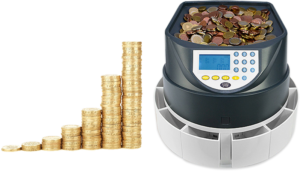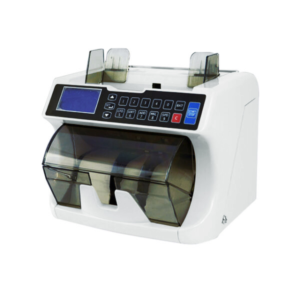

Buying a banknote counter, coin sorter or counterfeit detector from a Chinese manufacturer is, on paper, a simple transaction. In practice, the buyers who end up with machines that pass acceptance testing are the ones who treated the purchase as a due diligence exercise rather than a price negotiation. The equipment itself is mature technology; what separates a reliable supplier from a disappointing one is documentation discipline, process control and the willingness to prove claims with your own test samples.
This guide lays out the full vetting sequence used by professional buyers: the compliance documents to request before the first purchase order, what to audit inside the factory, how to structure a statistically meaningful pre-shipment inspection, how to evaluate a sample on your own currency, and which commercial terms shift risk in your favour. None of it requires a presence in China; all of it requires persistence.
What “Certified” Actually Means — and What It Does Not
The first step is understanding what the marks on a quotation really certify, because misreading them is the most common and expensive mistake in this category.
CE marking is a self-declaration for most cash handling machines. It is not a certificate issued by a lab, and there is no “CE certificate” in the way buyers often imagine. For a banknote counter — which is machinery with a motor and an electronic control system — the CE mark rests on a technical file and an EU Declaration of Conformity covering the Machinery Directive 2006/42/EC, the EMC Directive 2014/30/EU and the RoHS Directive 2011/65/EU. Note one important change: from 20 January 2027, the new Machinery Regulation (EU) 2023/1230 replaces the Machinery Directive, and machines placed on the EU market from that date must conform to the new regulation, which brings software and remote updates into scope. A supplier who cannot describe how their technical file will transition is telling you something about their compliance capability.
What CE marking does not tell you anything about is counting accuracy, counterfeit detection performance or durability. A machine can be fully CE compliant and still miscount. Performance claims live in a separate world: in the euro area, machines used by commercial banks and cash-in-transit companies for recycling must pass Eurosystem banknote equipment testing with defined detection and misrecognition thresholds, and the results are valid for a limited period. Established international manufacturers such as Glory and Cummins Allison publish tested models and performance data for exactly this reason — performance, unlike safety marking, has to be demonstrated per model and per currency. If your customer base includes European banks, ask directly whether the model has been tested and for which fitness and authenticity classes — and ask for the certificate number, not the claim.
For the US market, radio-frequency and conducted emissions fall under FCC Part 15 rules, and electrical safety listings (UL or ETL) are frequently requested by institutional buyers even though they are not federally mandatory for this equipment class. For the UK, post-Brexit rules require UKCA marking. None of these marks say anything about counting performance either — which is exactly why the rest of this guide exists.
The Document Set to Request Before the First Purchase Order
A supplier’s willingness and ability to produce documents quickly is itself a strong signal. Serious manufacturers keep these on hand because they answer the same requests from every institutional buyer. Ask for the set below, and score the response: complete documents within two business days is a green flag; partial PDFs with edited dates is a red one.
| Document | What it proves | What to check |
|---|---|---|
| EU Declaration of Conformity | Machine meets Machinery, EMC and RoHS requirements | Lists the exact model and serial prefix you are buying; directives named with numbers; manufacturer name and address |
| EMC test report | Radiated/conducted emissions tested against EN 55011 or EN 55032 | Report issued by an accredited lab; test sample photo matches your model |
| RoHS report | Hazardous substance limits in solders, paints, plastics | Covers all ten current substances; issued within the last two years |
| ECB / central bank test reference | Banknote authentication and fitness performance (EU customers) | Named test house, model designation, validity period |
| ISO 9001 certificate | Quality management system exists at the factory | Certificate scope covers the production site, not just the sales office; verify the certificate number with the issuing body |
| User manual and parts list | Serviceability and spare parts availability | Consumable parts (belts, rollers, sensors) are itemised with part numbers |
A short but important note on ISO 9001: certificates are frequently copied between companies, and factory registration sometimes covers only one building of a group. Every accredited certification body operates a public database — take the certificate number from the PDF and check it there rather than trusting the document itself.
Factory Audit: What to Check On Site or by Video
If the order value justifies it, audit the factory in person. If not, a structured video call through the production floor answers most of the same questions. The objective is not to admire the showroom; it is to see whether process controls exist between “parts arrive” and “machine ships”.

Work through these stations in order:
- Incoming inspection. Do motors, sensors and power supplies arrive with supplier certificates, and is there a sampling bench where they are checked? A factory that accepts everything at the dock will ship whatever its suppliers ship to it.
- Calibration and reference machines. Note counters need calibrated test frames and reference note sets. Ask how often the calibration reference is refreshed and where the records live.
- Burn-in and ageing. Reputable makers run a proportion of production — sometimes 100% on new tooling — through several hours of continuous cycling before packing. Ask what percentage of units get burn-in and for how long.
- Traceability. Can the factory tell you which batch of rollers went into serial number 1024? Serial number records with date codes are the difference between a targeted spare parts shipment and a blind one.
- Final QC bench. Watch a machine go through final inspection. It should run a known note set, a known coin set (for sorters) and a counterfeit reference sample, with results recorded — not just powered on and packed.
Smaller focused manufacturers often outperform large generalists on exactly these points, because the production manager personally owns the process. Mid-size OEM/ODM factories — Zhongshan Dongbo Financial Devices is one example of this category — typically combine their own tooling with the flexibility to implement buyer-specified acceptance criteria, which is worth more than a famous logo when you need a custom currency profile or a private-label firmware splash screen.
One practical tip for remote audits: script your questions in advance and ask them while the camera is pointed at the relevant station, not in the meeting room afterwards. “Show me the burn-in rack and pick any unit — what does the log say it has run so far?” is a question that cannot be answered convincingly unless the rack exists. Factories that handle these questions smoothly in a video call almost always handle production the same way; factories that need to “arrange the engineer” for every question are showing you their process, too.
Trading Companies and Manufacturers: Know Who You Are Talking To
The Chinese supply chain for cash equipment includes both factories and a large population of trading companies, some transparent about their role and some not. Neither is automatically bad: trading companies can consolidate mixed containers, handle communication across time zones and hold buffer stock. What matters is that the relationship matches your needs. A buyer who wants custom firmware, model-specific acceptance criteria and a ten-year spare parts pipeline should be talking to the factory — because every technical request routed through an intermediary adds translation loss and response time to exactly the processes where accuracy matters most.
Verifying who you are talking to is straightforward: the business licence states the registered scope, the ISO 9001 certificate scope names the production site, and export records are consistent between the factory’s name and the shipper on the bill of lading. A company whose quotation letterhead, ISO certificate and DoC carry three different names should be asked to explain the structure in writing. Legitimate arrangements always have an explanation; the explanation is what you evaluate.
Firmware, Currency Libraries and the After-Sales Decade
Banknote equipment is not bought once and left alone. Central banks issue new note series, update security features and withdraw old ones; a machine’s usefulness over five to ten years depends almost entirely on how its detection profiles are maintained. This is where the difference between a good supplier and a cheap one becomes permanent: a cheap machine with an abandoned currency library degrades into a coin-scale-with-a-motor the first time your market issues a new note.
Ask the supplier four questions in writing:
- How are currency profiles delivered — firmware download, service tool, or chip replacement — and can the buyer’s technician perform the update?
- What was the release history for your currency over the last three note series? Concrete dates and version numbers are a better answer than “regularly”.
- Is there a firmware customization option for private-label models, and who owns the customized version?
- How long after end-of-production will detection updates and spare parts remain available?
Buyers in multi-currency environments — exchange bureaus, border retail, remittance agents — should weigh this factor heavily, since a machine that handles several currency libraries is proportionally more expensive to develop and maintain, and the maintenance commitment is where weak suppliers quietly disappear. Our earlier article on multi-currency banknote counters covers the detection side of this question in depth.
Pilot Orders and Reference Checks
Between the sample evaluation and the first container sits the pilot order: a small production batch — often 20–100 units — bought at normal prices, deployed to real sites and observed for 60–90 days before the volume order is signed. The pilot serves two purposes. It forces the factory to run its normal production process rather than hand-building perfect samples, and it generates failure data from your own fleet: which components fail, how sites misuse the machines, what the real service workload looks like.
Reference checks belong in the same phase. Ask the supplier for two customers in a market similar to yours — same currency, similar volume — and call them. Two conversations of twenty minutes each will tell you what no audit can: how the supplier behaves when something breaks, how fast spare parts actually arrive, and whether the promises made during the sale survived contact with operations. A supplier who refuses reference checks without a good reason is volunteering information of a different kind.
Sampling Plans and Pre-Shipment Inspection
Factory QC protects the factory; inspection protects you. The industry-standard approach is acceptance sampling per ISO 2859-1 (the AQL system), executed either by a third-party inspection agency or by your own staff. For a typical order of 500–1,200 units at General Inspection Level II, the sample size is 80 units, drawn at random from packed cartons.
| Defect class | Typical AQL | Accept / Reject (n = 80) | Example defects |
|---|---|---|---|
| Critical | 0 | Ac 0 / Re 1 | Safety hazard; wrong voltage rating; missing earthing |
| Major | 1.0 | Ac 2 / Re 3 | Miscounts a known note set; counterfeit sample not detected; display or keypad failure |
| Minor | 2.5 | Ac 5 / Re 6 | Cosmetic scratches; label misalignment; loose accessories |
Values follow ISO 2859-1, General Inspection Level II, sample size code letter J. Adjust AQL levels to your own tolerance — institutional buyers commonly tighten the major-defect AQL to 0.65 for bank-grade equipment.
Put the AQL table, the defect definitions and the test method (which note set, which coin set, how many passes) into the purchase contract itself. An inspection clause written after the price is agreed has no leverage; one written before quotation does.
Evaluating a Sample Before Committing
Before any container order, buy or request samples and test them on your currency, in your environment, with your staff. Marketing brochures are written for the widest possible market; your acceptance test should be written for your worst week.
| Test | Method | Suggested pass criterion |
|---|---|---|
| Count accuracy | Three runs of a pre-counted 1,000-note stack, straight and face-down mixed | Identical count every run, zero error |
| Mixed denomination value counting | Two runs of 500 notes across all denominations in circulation | Value total correct both runs; per-denomination breakdown matches manual count |
| Counterfeit detection | Insert at least 20 confirmed counterfeits into 2,000 genuine notes, blind to the operator | 100% of counterfeits stopped or flagged; record false rejects of genuine notes separately |
| Worn and damaged notes | 500 notes drawn from actual teller intake, including taped and torn ones | Rejects routed to reject pocket, not lost; jam rate below your tolerance |
| Endurance | Continuous run of 50,000 notes or coins over one working day | No error accumulation; mechanism temperature stable; count unchanged |
Criteria are illustrative baselines — set your own tolerances in the acceptance test plan and require the factory to confirm them in writing before shipping the sample.
The counterfeit test deserves emphasis. Request the counterfeit reference set from your own central bank or police forensic unit where possible; online-sourced fakes are often too crude to be informative, and a machine that passes them easily tells you nothing about how it handles the sophisticated ones.
Commercial Terms That Shift Risk
Price is the smallest part of the commercial picture. The clauses below decide who pays when something goes wrong, and they are all negotiable — especially above minimum order quantities.
Incoterms. Specify the Incoterms 2020 rule and named place in the contract, not just “FOB” in an email thread. Under FOB, risk transfers to you when the goods are loaded on the vessel at the Chinese port; under DAP, the seller carries them to your door. The ICC Incoterms 2020 rules are the reference standard, and quoting the rule and place precisely (for example, “FOB Shenzhen”) removes most disputes before they start.
Payment. The common structure is a deposit with the balance against a copy of the bill of lading. First orders with an unverified supplier can be protected with a letter of credit or third-party escrow; established relationships usually relax this. Match payment exposure to how much of your vetting is complete — a full document set, audit and sample test earns looser terms; a quotation from a trade fair does not.
Warranty and spares. Ask three things: warranty length, what voids it, and how long the manufacturer commits to supplying spare parts and firmware updates after the model is discontinued. A two-year warranty is worthless if the currency library never gets updated for your market’s new note series. Get the spare-parts availability commitment in years, in writing.
OEM and intellectual property. If you are buying under your own brand, contractually assign the tooling, artwork and firmware customisations to yourself or secure perpetual usage rights, and confirm the supplier will not sell your configuration to your competitors. Manufacturers vary widely here; it is a question worth asking in the first meeting, not the last.
Logistics, Packaging and the First Shipment
The last mile of the vetting process is physical, and it is where otherwise careful buyers lose money. Cash handling machines contain optical sensors, rubber transport belts and precision feed mechanisms that do not tolerate rough transit, so packaging is part of the product specification: ask for the packing drawing, the gross weight per carton and the drop-test standard used. Machines shipped in single-wall cartons without foam end-caps arrive at destination with faults that look like factory defects and are argued about for weeks.
Confirm three things in writing before the container loads: the carton quantity and palletization plan, the marking and model labelling on each box, and the documentation inside the carton — manual, quick-start guide, power cord matching your market’s plug standard, and a packing list per carton. A machine that arrives without a manual is a training problem you created by not specifying one; a machine that arrives without the right plug standard is a machine that cannot be deployed at all. Photograph the container loading if you can — the photos settle most “short-shipped” disputes before they start, and they cost nothing.
Red Flags That Should End the Conversation
Some signals are worth more than any audit. Walk away — or at least re-quote elsewhere — when you see the following:
- CE “certificates” issued by private companies with no accreditation, or a DoC naming a different model number.
- Refusal to do a live video walk-through of production, or a video that only shows the showroom.
- Accuracy claims quoted to three decimal places with no test method behind them. Verified machine performance always comes with a defined test protocol and a validity period.
- Prices dramatically below the band quoted by every other factory for similar specifications. The difference is usually in the power supply, the motors or the sensors — the parts you cannot see from a photograph.
- Unwillingness to accept your acceptance-test criteria in the contract. If the factory will not commit in writing to what “working” means, assume it will not be.
A Buyer’s Procurement Checklist
Before you release the first purchase order, every line below should be ticked:
- EU Declaration of Conformity, EMC test report and RoHS report received, model-matched and dated within two years — with a plan for the Machinery Regulation 2023/1230 transition before January 2027.
- Central bank or Eurosystem test reference collected where your market requires it — for the counterfeit detector series as much as for counters and sorters.
- ISO 9001 certificate number verified against the issuing body’s public database.
- Factory audit completed in person or by structured video call, covering incoming inspection, calibration, burn-in, traceability and final QC.
- AQL sampling plan and defect definitions written into the purchase contract, with the inspection agency named.
- Sample tested on your own currency with the five-test protocol above, results documented, false-reject rate recorded.
- Incoterms 2020 rule and named place fixed; payment structure matched to vetting completeness; warranty and spare-parts commitment in years confirmed in writing.
- OEM tooling and firmware ownership terms agreed if buying under your own brand.
Buyers who follow this sequence do not necessarily pay more — in many cases they pay less, because a supplier who passes the vetting cleanly also has fewer hidden costs. The checklist is long, but it is a one-time investment per supplier relationship, and it converts an equipment purchase from a gamble into a managed procurement. For background on how certification requirements differ by market, see our earlier guides on cash handling equipment certification and how to test a banknote counter before you pay for it, as well as the DB780A banknote counter specifications for an example of a fully documented OEM product.