
A till that comes up short at the end of a shift starts a small investigation whether anyone plans for it or not. Who served the till, when were the last drops, was there a refund, was the change correct, was anything counterfeit — the questions are always the same, but the answers depend on records nobody wrote down at the time. Cash variance investigation is a discipline, and businesses that formalize it resolve shortages in hours instead of days, and more importantly, stop the same variance from returning next week.
This article gives cash office managers and retail loss-prevention staff a structured workflow: how to read variance signatures, how counterfeit losses hide inside honest arithmetic, a 48-hour investigation sequence, and the equipment controls that turn a recurring mystery into a closed case.
Variances Are Normal. Unexplained Variances Are Not.
Small discrepancies happen in any cash operation — a rounding difference here, a miskeyed refund there. The difference between a controlled operation and an uncontrolled one is not the size of the variance; it is whether every variance can be traced to a cause. A useful starting rule: any single-till variance above your policy threshold (many operations use the equivalent of one hour of sales, or a fixed small amount) triggers the investigation workflow below, and repeated small variances on the same till trigger it too, even when each one alone is under the threshold. Pattern matters more than magnitude.
Scale matters as well. Cash remains a large business — the Federal Reserve put $826.5 billion of notes into circulation in 2025 alone, and every one of those notes passes through somebody’s drawer, counter or deposit bag. Each organization’s slice of that flow is where its variance exposure lives, which is why the investigation has to start from your own transaction log, not from industry averages.
Step One: Read the Variance Signature
Before interviewing anyone, classify the variance. The signature — its size, frequency, timing and which till it clusters on — points to a cause far more reliably than intuition. The table below lists the signatures experienced cash-room supervisors learn to recognize.
| Signature | Most likely cause | First thing to check |
|---|---|---|
| Small overages and shortages, both directions, random tills | Rounding, miscounted change, till arithmetic | Receipt-level refund and void log for the shift |
| Consistent shortage on one till, one operator | Counting method issue — or targeted theft | Recount with a machine; compare operator against till peers |
| Shortage roughly equal to counterfeit value found later in deposit | Counterfeit accepted at the till | Deposit bag review; detector logs; note condition |
| Large single variance immediately after a drop | Drop error, skimming, or bag substitution | Drop video, bag seal numbers, dual-custody records |
| Variance appears only on high-traffic days | Rushed counting under volume stress | Staffing levels vs. transaction count; drop frequency |
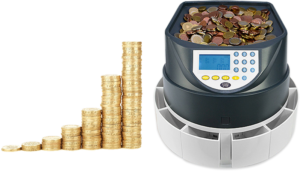
| Systematic difference by denomination (e.g. always short on coins) | Machine or scale error, foreign coins, token contamination | Coin counter calibration check; sample recount |
Two of these signatures deserve their own section, because they are the ones most often misread: counterfeit acceptance and machine error.
The Counterfeit Component: A Loss That Hides in Plain Sight
When a counterfeit note is accepted at a till, the face value of that note becomes a cash shortage, and nothing else about the shift looks wrong. Unless the note is intercepted later — at the cash office counter, at the deposit count, or by the bank — the variance is attributed to human error and the same loss repeats. Central bank data shows how much material is flowing: the Eurosystem withdrew 554,000 counterfeit euro banknotes in 2024, about 18 counterfeits per million genuine notes in circulation, with the €20 and €50 accounting for over 75% of all fakes found, according to the ECB’s February 2025 statement. Per million notes that is a small number — and across a retail chain processing millions of notes a year, it is not zero.
Two practical points follow. First, counterfeit losses concentrate on the denominations staff handle most — mid-value notes — because that is where counterfeiters get the best return per attempt. Second, interception point matters: a fake caught at the till costs nothing; the same fake caught at the bank deposit costs its face value plus the reconciliation time around the resulting variance. Every step downstream the detection point sits, the more expensive the miss becomes.
Staff who handle notes should know the security features on their own currency — the US Currency Education Program’s denomination guides and the ECB’s “feel, look and tilt” materials are the standard references — but human inspection fails predictably under queue pressure, which is why machine verification at the point of acceptance is the control that actually holds. The sensor technologies behind that verification are explained in our article on how banknote authentication sensors work.
A 48-Hour Investigation Workflow
Speed matters because evidence decays: video gets overwritten, staff forget, deposits get mixed. The sequence below assumes a single-till variance above threshold and is designed to reach a documented conclusion — cause identified, loss booked, or theft referred — within two business days.
- Hour 0–2: Secure the evidence. Bag and seal the counted cash from the affected till, photograph the count sheet, pull the transaction journal and the drop log for the shift, and note who operated the till and when drops occurred. Do not re-count in the drawer area; recount under dual control in the cash office.
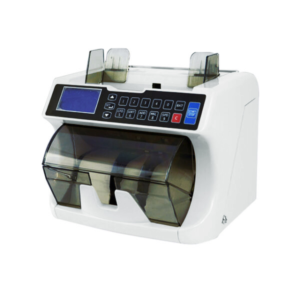
- Hour 2–6: Recount and reclassify. Recount under dual control with a counting machine — a value-counting banknote counter removes the arithmetic argument entirely, and a coin counter does the same for change. If the recount closes the variance, the cause was miscounting, and the fix is procedural: same-machine counting at every close-out from now on.
- Hour 6–24: Trace the transactions. Compare the journal against cash movements: refunds, voids, no-sales, drops, and the opening float. Small overages alternating with shortages usually resolve here as rounding and change-giving errors.
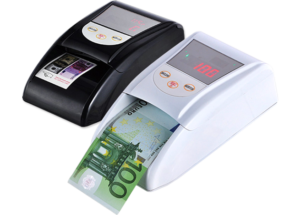
- Hour 24–36: Check the counterfeit angle. If the deposit has not yet gone to the bank, run the notes through a detector with UV, magnetic and infrared checks — a desktop unit such as the DB326 handles a full deposit in minutes. A confirmed fake matching the variance size closes the case: the cause was acceptance of a counterfeit, and the fix is detector coverage at the till, plus reporting the note per your central bank’s procedure (in the US, the US Secret Service counterfeit currency process; in the euro area, your national central bank).
- Hour 36–48: Conclude and document. Write a one-page record: variance amount, signature, evidence reviewed, conclusion, and the control change that follows. If no cause is identified and the pattern repeats on the same till or operator, escalate per your policy — that is now a loss-prevention matter, not a cash-office one.
The workflow’s value compounds: every concluded investigation adds to a variance history, and repeated signatures across months identify systemic causes — understaffed shifts, a worn feed mechanism in one counter, a dark spot in till camera coverage — that no single shift could reveal.
Equipment Controls That Prevent the Next Variance
Investigation tells you what happened; controls decide whether it happens again. Four controls cover the large majority of preventable variances:
- Machine-counted close-outs. End-of-shift counting by machine, not by hand, eliminates the single largest variance source. The counting step takes minutes with any value-counting machine from a currency counter series, and it produces a printed or displayed figure that both the operator and the supervisor sign against.
- Detector coverage at the till. Every note accepted where queue pressure is real should pass UV/MG/IR verification. Detection at the point of acceptance converts a future shortage into a refused note — the only point in the chain where the loss is zero.
- Dual-custody drops. Mid-shift drops witnessed by two people, with sealed-bag numbers logged, remove the large-variance-after-drop signature from the board entirely.
- Calibrated coin processing. Denomination-level coin variances usually trace to dirty sensors, foreign coins or tokens; a monthly calibration check against a pre-counted sample keeps the coin side of the ledger honest.
How these controls fit into the physical cash room — counting bench position, drop slot placement, camera angles over the count area — is a layout question as much as a purchasing one, and we cover it in detail in cash office design and throughput planning. Retailers comparing machine classes for this purpose will find that Cassida and similar vendors position their products by exactly these controls, which is a useful benchmark when comparing specifications.
Prevention Controls Compared
The closing comparison below summarizes what each control costs, what it prevents, and the residual risk left behind. Use it as a gap analysis: any signature from the first table that still has no matching control in place is your next variance waiting to happen.
| Control | Prevents | Cost profile | Residual risk |
|---|---|---|---|
| Manual close-out only | Nothing — it is the variance source | Lowest cash cost, highest labour cost | Recurring small variances; disputed counts |
| Machine-counted close-out | Miscounting, rounding drift, count disputes | One-off machine cost, minutes of daily time | Counterfeit losses still undetected |
| Till-level detector (UV/MG/IR) | Counterfeit acceptance losses at the point of sale | Low per till; consumable lamps on basic models | No protection against counting errors |
| Dual-custody drops | Drop errors, skimming, bag substitution claims | Procedural cost only (staff time) | Does not address till-level errors |
| Counter + detector + drops combined | All major preventable signatures | Amortised equipment cost + light procedures | Insider theft beyond cash handling; system outages |
The last row is the realistic target state for most cash-handling businesses. Not every variance is preventable — rounding will survive — but the combination of machine-counted close-outs, till-level detection, witnessed drops and a written 48-hour investigation workflow converts cash variance from an open-ended loss into a managed, documented and shrinking exception list.