一张磨损得无法识读的纸币已不再是货币。它成为一个处理例外:收银员无法用肉眼验证、ATM 会拒收、中央银行会销毁的纸币。将其退出流通的决定每小时要做出数千次,由机器依据大多数现金处理设备买家从未见过的数值阈值来完成。
本文要弥合的正是这一缺口。下文列出美联储和欧元体系实际采用的整洁度标准、分拣机为获批用于再流通业务必须达到的合格线,以及区分一台“能分拣纸币的机器”和一台“能正确分拣纸币的机器”的实践性问题。
现金循环有一道质量关卡,而它是机械性的
实体现金在一个闭环中流通。商业银行将盈余纸币存入中央银行,支取整洁纸币以满足需求,并通过网点和 ATM 将纸币交还给客户。上述每一个环节都在搬运同样的纸张,而每一次经过钱包、收银抽屉或点钞机,都会从纸币上带走一些东西:油墨、挺度、一个角,以及让安全线可被识读的清脆感。
若放任不管,这个循环会不断劣化。流通中的纸币越来越脏,直到防伪特征不再可靠工作,公众对货币失去信心。中央银行通过充当质量过滤器来应对:存款经过处理,真币按整洁度分级,整洁的重新投放,不整洁的则被销毁并以新印钞票替换。
欧元体系使这一过滤器对任何让欧元纸币再流通的主体都具有强制性。根据 欧洲央行决定 ECB/2010/14,欧元纸币只有在经过真伪和整洁度检查之后才能重新投入流通,而通过客户自助设备或现金取款机再流通的纸币,必须由已在某国中央银行通过测试的机型来处理。专业现金处理机构不能自行认定其点钞设备足够好。
美联储运行的是同一逻辑的较宽松版本。其再流通政策规定了存款机构在将货币重新投入流通之前必须做什么,而现金产品办公室则发布整洁度指南,将定性标准转化为可测量的数值。两种制度殊途同归:后台的那台机器如今是一项合规工具,而非便利设施。
所涉规模很容易被低估。根据其 向流通投放货币 数据,2024 年美联储向存款机构投放了 306 亿张纸币,并收回 298 亿张。其中每一张纸币都至少经过一次处理设备。
监管机构自己如何定义“整洁”
美联储在《运营通告 2》中将整洁货币定义为“适合继续流通、且足够清洁,使其真伪和面额可被容易确认的纸币”。不整洁货币则是“因物理状况——如撕裂、污损、疲软、磨损或涂污——而不适合进一步流通的纸币”。”
请仔细阅读这一定义,因为它解释了分拣机的整体设计。该检验是功能性的:人或传感器是否仍能确认该纸币为真且值其标示的面额?一张纸币不合格,并非因为它看起来旧,而是因为其状况妨碍了防伪验证或面额识读。
这 美联储整洁度指南 随后将该功能标准分解为各项单独测量:污渍、油墨磨损、涂写和污斑,以及纸张基材缺陷,如撕裂、孔洞、缺角、折角和胶带。有一条规则对任何配置机器的人都至关重要:一个项目必须至少在一项测量上不合格才算不整洁,而一个在多项测量上勉强合格的项目仍然算整洁。不存在评分系统,也不做平均。每项标准独立判定。
欧元体系以不同路径抵达同一终点。欧洲央行决定 ECB/2010/14 附件三列出了人工整洁度检查的十二项视觉标准:污渍、污斑、涂写、褪墨纸币、撕裂、孔洞、残缺、修补、皱褶、疲软、折痕纸币和折角。机器分拣被期望以高速、无需操作员逐张判断的方式,一致地重现这些判定。
决策背后的数字
污染程度以未印刷区域反射率损失来衡量,表示为 0 到 100 明度标度上的 L 值。读数越低,纸币越暗。油墨磨损以肖像面印刷像素中比标称反射率高 2% 以上的像素百分比来衡量,这是描述肖像已被磨掉的技术说法。涂鸦和污渍按面积大于 9 mm²、对比度比周围区域暗至少 10% 的可见标记计数。
阈值并非每种面额都相同。下表复现了美联储的表面适任标准。
| 面值 | 正面污染程度(L) | 背面污染程度(L) | 双面油墨磨损 | 涂鸦,每面面积 |
|---|---|---|---|---|
| $1 | 低于 84.30 | 低于 83.38 | 磨损像素达 25% 或以上 | 40 mm² 或以上 |
| 5 美元(2006 年版) | 低于 77.44 | 低于 79.32 | 磨损像素达 25% 或以上 | 40 mm² 或以上 |
| 10 美元(2004 年版) | 低于 79.14 | 低于 80.89 | 磨损像素达 25% 或以上 | 40 mm² 或以上 |
| 20 美元(2004 年版) | 低于 77.43 | 低于 75.35 | 磨损像素达 25% 或以上 | 40 mm² 或以上 |
那张表中有两个细节值得停下来思考。首先,1 美元阈值在正面比 20 美元阈值高出约七个 L 值。一张一美元纸币被允许在会让一张二十美元纸币退役的状况下继续流通。这是一个有意的经济选择:小面额纸币寿命更短、更换成本更低,因此可接受的脏污程度更高。如果一台机器对所有面额都套用同一个统一的脏污阈值,要么会拒收太多一美元纸币,要么会放行太多二十美元纸币,而这两种错误在演示中都看不出来。
其次,这些阈值是针对特定系列的。5 美元和 10 美元的数值指的是特定设计系列,因为纸张的反射率和印刷在不同设计之间存在差异。当新系列进入流通时,这些数值就会变化。任何硬编码单一一组数值、又没有更新途径的分拣规范,都会在几年内逐渐偏离合规要求。
几何性而非光学性的缺陷
大约一半的适宜性判定与纸币的外观无关,而与它的形状以及附着在其上的东西有关。美联储也为这些设定了测量限值。
| 缺陷 | 不宜流通阈值 | 机器为何关注 |
|---|---|---|
| 长度 | 低于 151 毫米,且纸币留存部分超过 50% | 过短的纸币会卡住传输机构并使图像窗口偏移 |
| 宽度 | 低于 63 毫米,且纸币留存部分超过 50% | 宽度是许多传感器上判断面额的主要线索 |
| 孔洞和开放撕裂 | 孔洞总面积超过 15 平方毫米,累加计算 | 孔洞会破坏磁性和紫外线特征 |
| 长边上的撕裂深度 | 超过 3 毫米,累加计算 | 撕裂在每分钟1600张的速率下发展成完全裂口 |
| 缺角 | 任何超过72平方毫米的角 | 角部带有用于对齐的方位标记 |
| 折角 | 超过182平方毫米,或任何尺寸的四个折角 | 折叠使表观厚度加倍并触发双张进纸错误 |
| 胶带 | 长度超过9毫米,厚度至少0.05毫米 | 胶带会遮盖磁性油墨,并可能在紫外光下发出荧光 |
胶带规则是最常让买家感到意外的规则。一条透明家用胶带对人类出纳员几乎不可见,对磁性传感器却完全不透明。在带有磁性安全线的纸币上,沿安全线路径贴胶带会产生与伪钞完全相同的读数。拒收严重贴胶带纸币的机器并非过于挑剔;它们是在拒绝认证一种无法读取的防伪信号。
折角规则解释了一种几乎每个现金中心都会在某个时候出现的故障模式:一叠纸币即使已经分开,却仍然反复因双张进纸错误而停机。一个折回自身的角在20毫米窗口内向厚度传感器呈现两层纸张。对机器而言,这与两张纸币一起通过无法区分。理解这一几何原理的操作员会停止重新送入该叠纸币,转而检查角部。
机器如何测量监管机构所定义的内容
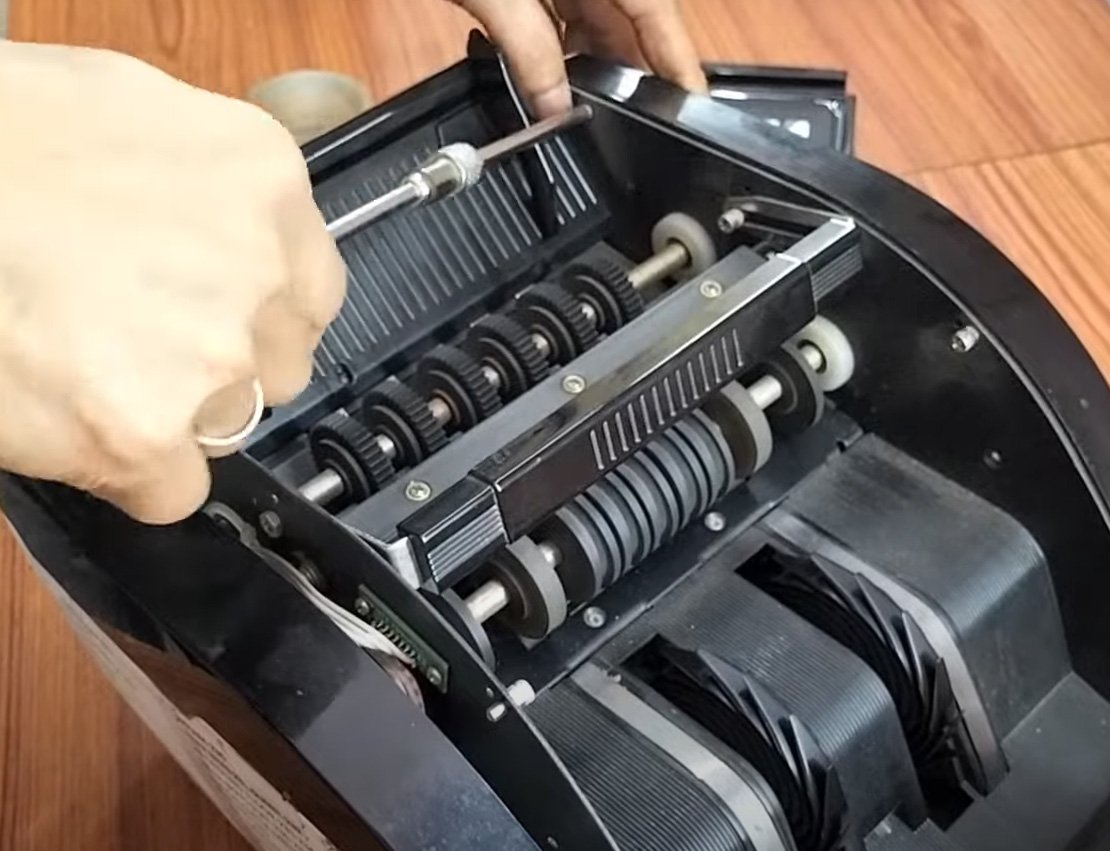
一台具备流通适用性检测能力的机器,是沿传输路径排列的一套传感系统,每个传感器回答不同的问题。
颜色和可见光反射传感器回答污渍问题。它们将未印刷区域的亮度与该面额和系列的标准值进行比较,这正是L值最初产生的方式。该测量的质量与其说取决于传感器,不如说取决于参考数据:在一批印刷品上校准的机器在另一批上表现很差,而仅在崭新纸币上校准的机器会误读均匀老化的纸币。
红外传感器回答另一个问题。红外反射和透射对油墨化学性质和纸张基材有响应,这就是为什么红外在面额识别方面较强,而在严重脏污的纸币上较弱——表面污垢会散射信号。这是机器可能将一张脏污纸币接受为真钞但拒收为不宜流通、或反之的技术原因。
紫外传感器寻找纸张荧光以及印入纸币的紫外特征。在紫外光下,大多数普通纸张会发光而真钞纸张不会,这就是为什么紫外能发现复印品,也是为什么紫外是最受某些胶带、漂白剂和洗涤剂影响的通道。
磁性传感器读取铁磁性油墨,并在许多系列上读取磁性安全线或磁性编码图案。这是最能在污垢下存活、也最受折叠影响的通道,因为折叠会使磁性材料移出读头的窗口。
厚度测量根据设计为机械式或超声波式。滚轮位移千分尺根据滚轮被推开的距离推断厚度;超声波传感器测量穿过纸币的飞行时间。两者都能检测双张进纸,且两者都会随着测量表面上的灰尘积累而发生漂移,这就是为什么清洁周期应属于规格说明而非维护手册。
最后,线扫描成像将整个决策串联起来。现代分选机捕获每张纸币的完整图像,并在该图像上运行污渍、印刷磨损、涂鸦和几何检查,然后将结果附加到交易记录中。正是该记录使审计成为可能:对于任何已处理的批次,机器都能说明有多少张纸币被评为宜流通、有多少张被评为不宜流通,以及依据哪项标准。
If you want a deeper treatment of how the individual sensors behave and where each one fails, the companion article on 纸币验证传感器 covers UV, IR, magnetic and magnetic-thread detection in detail.
The Eurosystem’s five-category model
The ECB approach is worth studying even for buyers outside the euro area, because it separates two things that get muddled in cheaper equipment: “not genuine” and “not fit”. A machine that only has one reject stacker cannot make that distinction, and the distinction has legal consequences.
| 类别 | What it contains | Required action |
|---|---|---|
| 1 | Objects not recognised as euro banknotes: wrong format, transport errors, large folded corners, missing parts, other currencies | Returned to the customer or operator; not credited |
| 2 | Suspect counterfeits: correct image and format, one or more security features missing or out of tolerance | Withdrawn from circulation, handed to national authorities within 20 working days, not credited |
| 3 | Notes that cannot be clearly authenticated, for example because of tolerance deviations or poor condition | Treated like category 2, but may be credited to the account holder |
| 4a | Genuine notes that pass every fitness check | May be recirculated |
| 4b | Genuine notes that fail at least one fitness criterion | Returned to a national central bank; must not be recirculated |
The practical implication is stacker count. A machine that handles recirculation work needs at least four destinations: fit, unfit, suspect, and reject. Counting machines with two stackers can count and authenticate, and many retail operations run perfectly well that way, but they cannot support a recirculation decision on their own.
Category 3 is the one that trips up procurement teams. It exists because authentication is probabilistic at the edges: a note may be genuine but too worn, or too contaminated, for a particular sensor to confirm a feature with confidence. The regulation does not pretend the machine knows everything. It creates a holding category for “cannot confirm”, requires that those notes leave the recirculation flow, and lets the institution credit the customer while the note goes for human review.
The pass marks a machine has to hit
The Eurosystem’s common test procedures set numeric acceptance criteria. A machine type does not pass because it looks accurate in a showroom; it passes because it meets thresholds against a test deck assembled by a national central bank.
| Test | 要求 |
|---|---|
| Counterfeit detection | At least 90% of the counterfeit test deck sorted into categories 2 or 3, and none into category 4 |
| Fitness detection, unfit notes | No more than 5% of the unfit test deck sorted into category 4a |
| Fitness detection, fit notes | At least 90% of genuine fit notes sorted into category 4a |
| False rejection of fit notes | No more than 1% of genuine fit notes sorted into categories 1, 2 or 3 |
Those four numbers describe a trade-off that every operator lives with. The 5% limit on unfit notes reaching the fit stack is a ceiling on under-sorting. The 90% floor on fit notes reaching the fit stack, combined with the 1% ceiling on false rejection, is a ceiling on over-sorting. A machine can always hit one of them by sacrificing the other; the test exists to stop manufacturers from doing exactly that.
Test results are also time-limited. Under the decision, a successful test is valid for one year, and a machine type that can no longer detect all known counterfeits is removed from the published list. That is the structural reason software updates are part of the product, not an after-sales favour.
What over-sorting and under-sorting actually cost
Both directions of error cost money, and they cost it in different places.
Under-sorting pushes unfit notes back into circulation. In the euro area that is a compliance failure with a defined escalation path: a national central bank can require corrective measures within a time limit and, until the problem is fixed, prohibit the institution from recirculating the affected denominations. In any market, the commercial damage is quieter but real: ATMs jam more often, counter staff spend more time on manual verification, and customers receive notes they do not trust.
Over-sorting destroys value directly. Every fit note that a machine sends to the unfit stack has to be replaced by a new note at the central bank’s printing cost, and the institution carries the transport and handling of a deposit that should never have been made. The St. Louis Fed reports that about 85 percent of the currency deposited with it is fit, which sets a useful benchmark: in a well-run cash operation, the large majority of what comes in should be going straight back out. A branch seeing a fit rate far below that is usually looking at a calibration problem, not a customer behaviour problem.
Counterfeit performance sits alongside fitness performance, and the numbers explain why central banks keep tightening machine tests. The ECB recorded 554,000 counterfeit euro banknotes withdrawn from circulation in 2024, or 18 counterfeits per million genuine notes in circulation, with the €20 and €50 accounting for more than 75 percent of the total. Those rates are low, and they are low partly because machine testing works.
Matching machine class to site
Fitness sorting is not a single product category. It is a capability level, and buying above or below the site’s need wastes money in both directions.
A retail branch or a supermarket cash office needs counting, authentication and batch separation. A two-stacker counter with UV, magnetic, infrared and dimensional detection covers that requirement, and the note that fails authentication goes to a reject stacker for a supervisor to review. Fitness grading is unnecessary because those notes are going to a bank anyway, not back to a customer.
A bank branch that recirculates notes to customers has a different obligation. It needs at least a three-way split between fit, unfit and suspect, and it needs the transaction record to prove the split happened. That is the entry point for compact fitness-capable machines.
A cash centre needs throughput, and throughput arithmetic is unforgiving. A machine rated at 1,600 notes per minute is processing 96,000 notes an hour at continuous speed. Real output is lower, because stacks have to be loaded, strapped and reconciled, and because stops for jams and rejects consume time. At a realistic 60 to 70 percent duty cycle, a single 1,600-note machine delivers roughly 55,000 to 65,000 notes an hour of productive work, which is the number to use when sizing a shift against daily volume. Buying on the headline speed rather than the duty-adjusted figure is the most common sizing error in cash centre projects.
Dongbo’s own range sits mostly in the first two categories: counters and detectors for retail, branch and wholesale operations, such as the DB780A with a 300-note hopper and speed settings from 600 to 1,600 notes per minute, and the DB550 for higher-volume wholesale work. For full fitness sorting, buyers should confirm the machine’s stacker configuration and per-denomination fitness parameters against the criteria above rather than assuming that a high sensor count implies fitness capability. The full 产品系列 is organised by series for that comparison.
Questions that belong in the RFQ
Most RFQs for cash-handling equipment ask about speed, hopper capacity and price. Those three answers are easy to give and almost useless for predicting whether the machine will pass an audit in year three. The questions below are harder to answer, which is precisely why they are worth asking.
Ask for the fitness parameter list by denomination and series, and ask how those parameters are updated when a new series is issued. Ask whether the machine produces a per-batch record showing fit, unfit, suspect and reject counts, and whether that record can be exported rather than photographed off a screen. Ask what the false-rejection rate is on circulated fit notes, not on new notes, because new notes flatter every sensor.
Ask which sensor handles limpness, and whether limpness is measured directly or inferred from soiling. Many mid-range machines infer it, which is acceptable if the limitation is disclosed and unacceptable if it is not. Ask how the thickness sensor is cleaned and how often, and what the drift looks like over a shift. Ask whether the reject stackers are physically separate or share a destination under some modes.
Ask what happens to the machine when a new counterfeit family appears. The answer should involve a software update with a defined turnaround, not a service visit. Ask whether the machine type appears on any national central bank’s tested list, and if not, why not. Ask for the maintenance interval in notes processed rather than in months, because a machine in a busy cash centre reaches a month of wear in a week.
采购清单
Use this list to compare offers on the criteria that determine fitness-sorting performance rather than on the criteria that are easy to print in a brochure.
- Fitness parameters are listed per denomination and per series, with a documented update path.
- The machine separates fit, unfit, suspect and reject into physically distinct destinations.
- A per-batch audit record exists and can be exported in a format the finance team can reconcile.
- False-rejection performance is quoted on circulated notes, with the test method disclosed.
- Limpness measurement is either direct or explicitly declared as inferred.
- Cleaning and calibration intervals are specified in notes processed, with consumable part numbers.
- Sensor set covers UV, infrared, magnetic, magnetic thread and dimensional checks, not a subset presented as a full set.
- Software update turnaround is defined in writing, including who pays for it.
- Tested-machine listing status is stated for the relevant jurisdiction, or the absence of one is explained.
- Throughput is quoted as a duty-adjusted figure for the site’s actual mix of denominations, not as a peak speed.
None of these questions require a technical background to ask, and all of them change the conversation. A supplier that can answer them is describing a machine it understands. A supplier that cannot is describing a catalogue page.