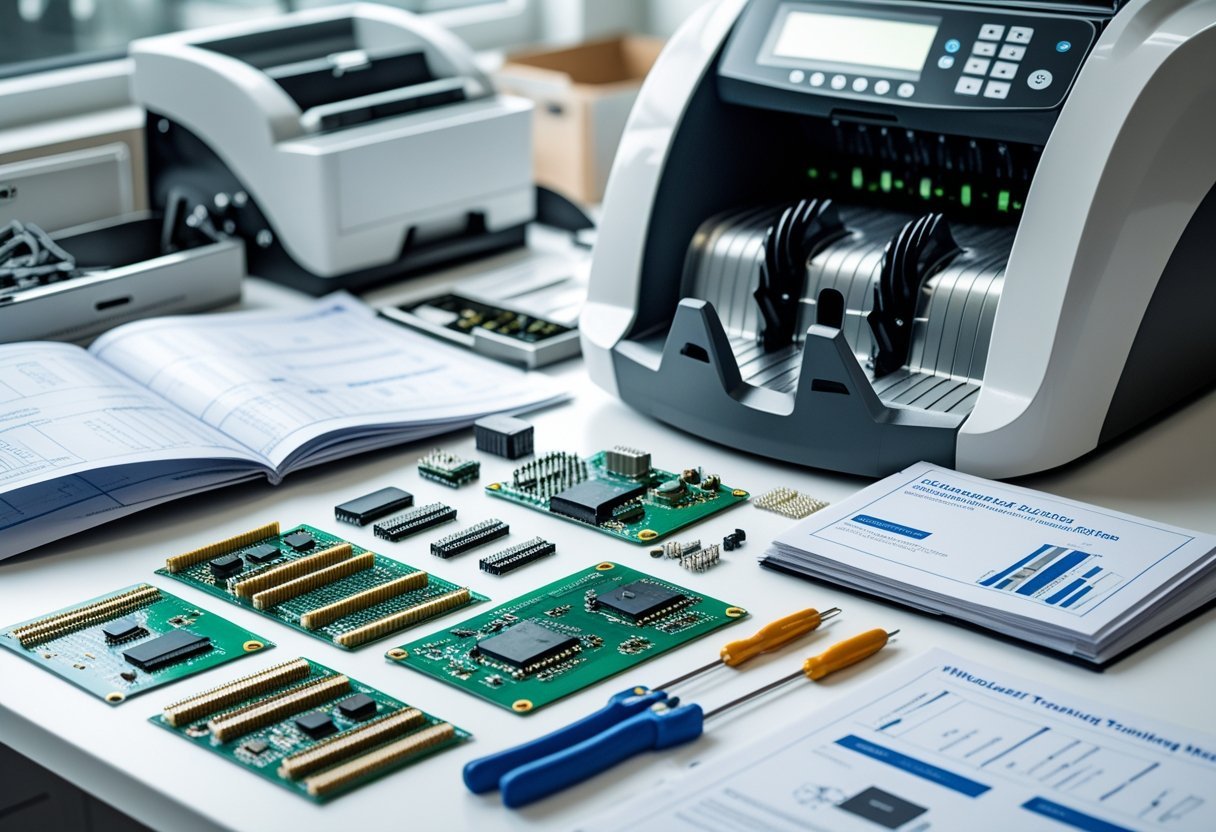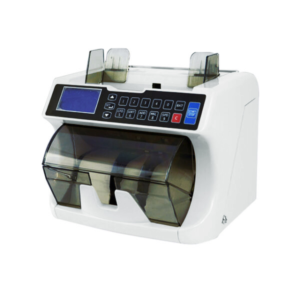
随便走进任何一场银行设备招标会,你都会发现这两台机器出现在同一份报价单上:出纳现金循环机的价格是纸币点钞机的数倍,而后者只是前者的一小部分。采购团队常常把循环机视为“高端选项”,把点钞机视为“预算选项”,这其实是对这两款产品的双重误解。它们解决的是不同的问题,在做出采购决定之前,首先要做的是一个工作流程方面的决定。
本文依据两种机器实际的操作逻辑进行比较,并参照欧元体系对机器的分类来说明监管层面的情况,同时引用已发布的现金自动化调研数据来勾勒市场背景。文中凡属建模推算而非实测所得的数字,其假设条件均已公开说明。
两台机器,两种用途
A 纸币点钞机 是一种吞吐设备。它进行清点,可选按面额分类,可选进行鉴伪,然后堆叠。纸币单向通过机器一次,进入堆叠器。接下来由操作员决定怎么处理:装袋、封口、交给现金押运人员,或者再送入机器进行批量处理。
A 出纳现金循环机 是一种内置清点功能的存储设备。它接收纸币,进行鉴伪,通常还会检查纸币的适用性,将其存放在钞箱中,并从同一库存中为下一位需要取现的客户出钞。一个窗口的存入可以变成另一个窗口的取出。该机器持有的是实时周转现金,而不是产出一个处理完毕的钞票捆。
这一单一差异——将收到的纸币循环使用——决定了其他一切:它所属的认证体系、其所在房间的安全要求、它所需的服务合同,以及决定它能否回本的算术。
欧洲规则手册对这两种机器分别是怎么规定的
欧元体系对纸币处理机器的分类,是理解这一功能分界最清晰的公开框架,因为处理欧元现金的资格取决于机器所属的类别以及它是否通过了相关测试。根据欧洲央行公布的测试程序(欧洲央行,《纸币处理机型测试程序》),各类别如表1所示。
| 类别 | 操作方 | 功能 | 是否循环存款? |
|---|---|---|---|
| CRM——现金循环机 | 客户 | 接收并检查纸币,出钞其他客户存入的纸币 | 是的 |
| CCM — 存取款一体机 | 客户 | 接收并检验存款;分发单独装载的现钞 | 不 |
| CIM — 存款机 | 客户 | 仅接收并检验存款 | 不 |
| COM — 取款机 | 客户 | 检验并分发纸币 | 不 |
| BPM — 纸币处理机 | 工作人员 | 检验纸币的真伪和适用性 | 不 |
| BAM — 纸币鉴伪机 | 工作人员 | 仅进行真伪检验 | 不 |
| TARM — 柜员辅助循环机 | 工作人员 | 存放纸币,允许现金处理人员对客户账户进行贷记或借记,检验真伪和适用性 | 是的 |
| TAM — 柜员辅助机 | 工作人员 | 存放纸币并支持贷记/借记,仅进行真伪检验 | 不 |
你在后台所熟知的柜台设备属于 BPM/BAM 系列。柜员循环机属于 TARM 类别——而对于面向客户的部署,则是 CRM。监管后果很重要:将重新投放给公众的纸币必须由已通过欧元体系测试的机型进行检验,包括对循环纸币的适用性检验。一台既存放又重新分发纸币的机器,比一台仅对存款进行一次清点的机器承担着更重的鉴伪和适用性责任。
在欧元区以外,具体规则有所不同,但基本逻辑是相通的:一旦机器重新发出客户存入的纸币,监管机构就要求其达到适合客户操作设备的鉴伪和适用性标准,而这些标准比后台柜台所需满足的标准更为严格。
实践中的工作流程差异
数一数在每种配置中一张纸币所经过的步骤,运营成本的差异便不言自明。(关于这些设备如何融入更广泛的房间布局,请参阅我们关于 现金办公室设计与吞吐量规划的文章.)
使用柜员机: 柜员收到现金,键入预期金额,放入整叠纸币,读取结果,手动处理任何差异,更换抽屉卷钞,并在班次结束时再次清点抽屉。存款捆随后被运往金库或 CIT 团队。每一张纸币在其支行生命周期中都会被人类和机器多次触摸和清点。
使用循环机: 柜员只需放入一次整叠纸币;机器会进行鉴伪、计价和存储。当下一位客户取款时,机器会从该库存中出钞,且已经过核验。日终对账依据机器自身的记录进行,而不是手动重新清点的抽屉。纸币的处理次数急剧下降,产生错误和争议的人工接触点数量也随之减少。
不过,柜员机的真正优势在这一比较中依然成立。它的价格只是循环机的一小部分,便于携带,除了桌面之外无需分配地面空间,可与任何您拥有配置文件的货币配合使用,而且当它发生故障时,不会连带导致支行支付现金的能力中断—— 例如 DB550 这样的中端机型 重约六公斤,可放在任何桌面上。循环机故障是支行运营事件;柜员机故障只是抽屉和第二台机器的问题。

自动化数据说明了什么
在进行任何盈亏平衡计算之前,值得了解市场实际进展到了哪一步,因为循环机的销售宣传往往假设了一种调查数据并不支持的紧迫性。欧洲央行 2024 年对欧元区各地企业现金使用情况的调查(覆盖所有 20 个欧元国家的 7,675 名受访者)提供了基准,汇总于表 2。
| 指标 | 结果 |
|---|---|
| 接受现金的企业 | 88%(低于 2021 年的 96%) |
| 预计继续接受现金五年的企业 | 94% |
| 定期存入现金的企业 | 70% |
| 最常见的存款渠道——现金存入机 | 56% |
| 通过银行柜台存款 | 49% |
| 通过 CIT 提供商存款 | 17% |
| 尚未实现现金运营自动化的公司 | 66% |
| 已完成自动化的公司中:安装了智能现金柜台的 | 20% |
| 已完成自动化的公司中:配备现金收付结账终端的 | 10% |
| 无自动化计划的未自动化公司 | 85% |
直白地说,三分之二每日处理现金的公司尚未实现任何环节的自动化,而其中大多数并无启动自动化的打算。这并非反对使用现金循环机的论据,而是对商业价值真正所在之处提出的警示。自动化投资在交易量集中的地方才能获得回报——银行、现金押运处理商、大型零售——而不是在调查中占多数的群体所在之处。如果你的交易量特征与调查中位数零售商相似,诚实的建议通常是配置一台好用的柜台并配合严谨的流程,而非购入一台等待永远不会到来的交易量的循环机。
人力配置测算:你真正换回的是什么
循环机的经济论证核心是时间。要对此建模,你需要一个工资数据和一个现实的时间节省。美国劳工统计局OEWS 2024年5月数据将银行柜员的工资中位数定为每小时17.62美元,约合每年36,640美元(BLS,《职业就业与工资统计》,2024年5月)。欧洲各地工资水平因国家而异;下文的方法适用于任何当地数据。
一个已演算的示例,明确标注为带有既定假设的模型:
- 网点现金交易:每日250笔,其中150笔为存款或现金支付,平均人工清点需90秒,循环机将其缩短为20秒的进钞时间。
- 日终抽屉对账:每位柜员每日25分钟,对照机器记录可缩短至约8分钟。
- 两名柜员负责现金业务,每年250个工作日,综合人力成本为每小时22美元(工资加雇主成本)。
节省的清点时间:150 × 70秒 × 250天 ≈ 每年729小时。节省的对账时间:2名柜员 × 17分钟 × 250天 ≈ 每年142小时。合计约871小时,按每小时22美元计算约为每年19,200美元。而循环机的综合成本——这正是该模型不再具有普适性的地方——采购价加服务合同加耗材,在交易密集型网点已公开的大多数部署中,投资回收期为两到五年。但请看敏感性:一个每日仅做60笔现金交易的网点,节省量约为该数字的三分之一,回收期将超出机器的有效使用寿命。交易笔数是决定一切的那个变量,这正是应当要求供应商提供可比网点的交易笔数、而非总体声称的原因。
该模型还省略了两项仅偶尔有利于循环机的效应:现金保险费降低(保险公司对机内金库存储的定价不同)以及现金押运频率降低,因为备付金在内部循环。两者均取决于当地安排,因此应将其视为上行空间,而非基准情形。
柜台仍然胜出的情形
在以下部署场景中推荐循环机会构成失职:
- 交易量低且不均衡。 每个网点每日低于约100笔现金交易时,节省的时间往往仅能覆盖循环机的服务合同费用。
- 多币种后台。 一台可按需切换币种配置的柜台,能比配置为一两种币种备付金的循环机更灵活地处理混合币种业务台。
- 收进后立即付出的现金。 If most deposits are bundled for CIT pickup without re-issue — the pattern in many small retail and wholesale operations — the recycling loop never closes, and you paid for storage you do not use. The deposit-side workflow is covered in our article on CIT handover procedures.
- Tight budgets with standardisation needs. Five counters can be bought, swapped and serviced for the cost of one recycler’s first year of support, and a spare counter on a shelf is a form of resilience a recycler cannot offer.
For these deployments, a heavy-duty counting machine with value counting and authentication — the class typified by units like the DB780A, rated for 600 to 1,600 notes per minute depending on mode — delivers most of the operational benefit at a very different cost point. The five-year cost structure of that choice is covered in our earlier cost breakdown.
Where the recycler earns its keep
Conversely, the recycler is the right answer when these conditions hold simultaneously:
- Sustained two-way volume. Deposits and withdrawals both run high all day, so the stored float actually cycles. A recycler that only accumulates is an expensive safe.
- Single dominant currency. The float is one currency, which keeps the profile problem simple and authentication consistent.
- Teller labour is expensive or scarce. In markets where teller turnover is chronic, the machine holds the procedural knowledge: it counts, it balances, it never calls in sick.
- The room can support it. Power, floor space, network integration with the core banking system, and physical security appropriate to a device holding a live float.
- Regulatory pathway is clear. For euro operations, the machine type must be on the list of successfully tested machines; elsewhere the equivalent approval must exist before purchase, not after.
Larger branches often run both devices: recyclers at the teller line for the customer-facing flow, counters in the back office for vault preparation, CIT bundling and the mixed-currency exceptions. The comparison is not a bracket to pick one from; it is a portfolio decision.
Hidden costs to price before signing
Whichever side you land on, four cost items routinely surprise buyers:
- Service contracts. Recyclers are cassette-and-vault machines; downtime costs branch capacity, so response-time SLAs are priced accordingly. Get the multi-year service quote, not the first-year promotional one.
- Software integration. A recycler that does not talk to the core banking system delivers half its benefit. Integration work is a real budget line, often larger than expected.
- 耗材和易损件。 Feed rollers, belts and sensor windows wear faster on recyclers because deposit condition is uncontrolled. Ask for the wear-parts price list and the expected replacement intervals.
- Security upgrades. A device holding a float may trigger requirements for the room it sits in — reinforced furniture, alarm integration, CCTV coverage. Price the room, not just the machine.
A five-question decision test
- How many cash transactions per day, split deposits versus withdrawals? (Below ~100 total, start with counters.)
- What share of deposits is re-issued in-branch within a week? (Low share, low recycling benefit.)
- How many currencies must the device handle daily? (Two or more, profile depth beats float convenience.)
- What does a teller-hour actually cost, loaded, in your market? (Feed it into the model, not the list price.)
- Is the machine type approved for recirculation in your jurisdiction? (For euro: check the ECB tested-machines list first.)
常见问题
Can a banknote counter dispense cash?
No. A counter counts and stacks in one direction; it has no cassette storage or dispensing mechanism. Dispensing requires a recycler or a dedicated dispensing module.
Do recyclers count faster than counters?
Generally not. Counters remain the throughput champions for pure batch counting — heavy-duty units run 1,500+ notes per minute in count-only mode. Recyclers trade raw speed for storage, authentication depth and dispensing.
Is fitness checking mandatory for recycled notes?
In the euro area, yes — notes recirculated to the public must be checked for authenticity and fitness by machine types that have passed the Eurosystem tests. Other jurisdictions apply similar principles with local rules.
Can one branch justify both machines?
Often, yes: a recycler at the teller line plus one or two back-office counters for vault and CIT preparation is a common and defensible configuration in high-volume branches.
What happens when the recycler’s float runs out on a busy day?
Branches manage float levels against forecast demand; when the cassette is short, the teller tops it up from vault stock by feeding the machine, which re-authenticates the notes on the way in. Poor float forecasting shows up as teller queue times, so monitor it.