The moment a sealed bag leaves a shop’s cash office and enters an armoured vehicle, two organisations disagree about what is inside it. One of them will be wrong. The purpose of a cash-in-transit handover procedure is to make sure that when the disagreement surfaces — usually the next morning, at the counting centre — it can be resolved from paper and video rather than from memory and suspicion.
Most CIT losses are not dramatic. They are small, repetitive, and administrative: a bag logged against the wrong manifest line, a deposit credited one bundle short, a seal replaced after a spill. This article looks at the handover as a control problem, with the equipment and document design that make it work.
Custody changes at the door; ownership does not
The first thing a new operations manager has to unlearn is that the handover is a sale. It is not. The retailer still owns the cash; the CIT provider takes custody, and the bank takes custody again when the bag is accepted at the counting centre. Value only moves when the deposit is credited, and the credit follows the count, not the collection.
That distinction explains why a signed collection note is not proof of deposit value. It proves that a sealed bag with a stated reference was collected at a stated time by a named courier. Everything else — the amount, the denomination mix, the condition of the notes — is still unverified. Procedures that treat the collection note as evidence of value are the ones that generate disputes three days later, when a customer’s account is short and nobody can say at which of the three custody points the difference appeared.
Practical consequence: a handover needs two records, not one. The custody record (who took what, when, in what condition) and the value record (what the count found). Keep them separate in your systems, and make the link between them a bag identifier rather than a person’s memory.
The document set that makes a handover provable
In a dispute, the winning side is usually the one with the most complete, time-stamped record. Six elements do most of the work:
- Bag identifier, unique and pre-printed. Barcoded, recorded at sealing, recorded again at collection. Never handwritten at the door.
- Manifest line per bag. Declared value, declared note count, currency, and the deposit reference the bank will match against. One line per bag, not one total per run.
- Seal number. Issued to a named person, recorded against the bag, checked at receipt. A seal register that is a page in a folder is fine; one that is nobody’s job is not.
- Collection receipt with time. Courier ID, vehicle reference, number of bags, and the time of collection to the minute. Time matters because it establishes which shift’s count a bag belongs to.
- Weigh-in record where used. If bags are weighed at collection or at receipt, record the weight. A 40-gram difference is a strong signal long before anyone opens the bag.
- Discrepancy report. The document that closes the loop: bag ID, declared value, counted value, difference, cause code, action taken, and the name of the person who authorised the adjustment.
The common failure is not a missing document; it is a document that cannot be joined to the others. If the bag ID on the manifest is not the bag ID on the seal register, the audit trail has a break, and a break is where disputes become opinions.
Where discrepancies actually come from
Buyers often assume that differences are a theft problem. In practice, the majority of small differences come from process, and each source has a different detection point. The table below is the one we use when reviewing a site’s procedure.
| Source | What it looks like | Best detection point |
|---|---|---|
| Mixed denominations counted as one stack | Small, direction-consistent differences of one or two notes | At sealing, by requiring denomination separation before counting |
| Machine miscount on folded or damaged notes | Differences that appear only on specific bags, often weather-dependent | At counting, by reviewing the reject pocket rather than trusting the total |
| Bag substitution or mislabeling | A large difference in both directions across two deposits | At receipt, by scanning bag IDs against the manifest before opening |
| Notes removed before sealing | Differences concentrated in one operator’s bags, not in one store’s | At sealing, by dual control above a value threshold |
| Currency error | Difference equal to the gap between two notes of similar colour | At counting, with authentication and per-currency profiles |
| Transposition in the manifest | Difference of exactly 900, 90 or 9 in either direction | At data entry, by a second-person check on values above threshold |
| Seal failure in transit | Intact bag, broken or duplicated seal, notes displaced | At receipt, by seal verification before the bag is opened |
The pattern in the “what it looks like” column is the useful part. A difference that runs consistently one way suggests a counting or separation problem. A difference that appears in both directions across paired deposits suggests a labeling or substitution problem. A difference concentrated in one person’s work suggests a control problem. Reading the pattern before opening an investigation saves weeks.

Two counts, one number
The single most effective change most sites can make is to count twice, in different places, by different means. In practice that means a machine count at the store or branch before sealing, and a machine count at the receiving centre before credit. The two numbers are compared, and the comparison is what produces the discrepancy report.
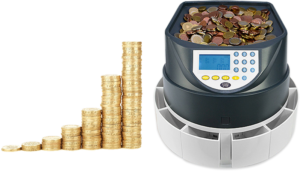
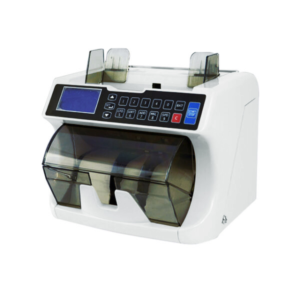
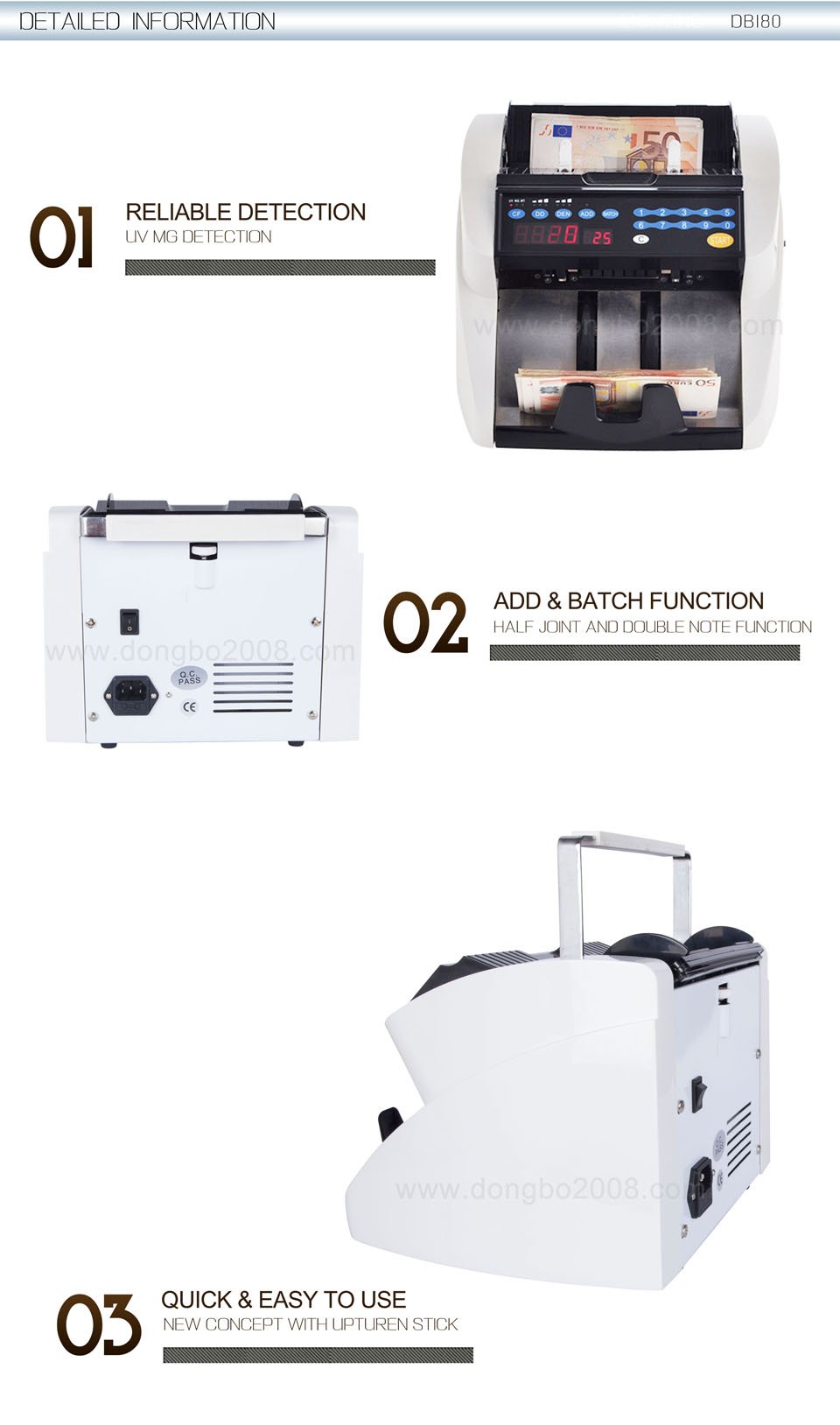
This is where equipment choice has a direct effect on dispute rate. A counter that reports banknote counts and value separately, with a printed slip, gives the sender a defensible record at the moment of sealing. Machines such as the DB550 and the DB780A are built around that requirement, with print output as standard or optional depending on the configuration. A counter without a printer forces the operator to transcribe, and transcription is where honest differences are born. If you are specifying machines for a multi-site rollout, insist on printed or exported output with a timestamp; the cost difference is trivial next to the cost of one contested bag per week across 200 stores.
For sites that handle several currencies, per-currency profiles are not a convenience feature. A profile that is wrong for the batch produces a total that is internally consistent and externally wrong, which is the hardest kind of error to find. Our note on how authentication sensors work explains why the sensor set, not just the counting sensor, decides whether a wrong-currency note is flagged or quietly counted.
Seals, bags and tamper evidence
Tamper evidence is a design property, not a product category. A seal works when three conditions hold: it cannot be removed and reapplied without visible damage, its number is recorded before the bag leaves the site, and the receiving point checks the number before opening.
Most seal failures we see in audits are administrative. The seal is applied correctly, but the number is written on the manifest after the bag has already been handed over, or the receiving clerk opens the bag first and checks the seal second. Neither is a fraud; both destroy the evidentiary value of the seal.
Three rules fix it cheaply. Seal at the counting bench, not at the door. Record the seal number in the same transaction as the bag ID. And make seal verification the first action at receipt, before the bag is opened, with the check recorded even when the result is “correct”. A register that only records exceptions cannot demonstrate that the checks happened.
How deposits actually move
Procedure design should match how the money physically travels. The ECB’s 2024 survey of companies in the euro area gives a useful picture of the channel mix for retail and hospitality businesses.
| Deposit channel | Share of companies that deposit cash |
|---|---|
| Cash-in machine (cash recycling or deposit machine) | 56% |
| Bank counter | 49% |
| Cash-in-transit collection | 17% |
| Night vault or safe drop | 14% |
Source: ECB, Use of cash by companies in the euro area in 2024. 70% of surveyed companies deposit cash regularly; the same survey found 88% accept cash and 94% of those expect to keep accepting it for at least five years.
Two things follow. Most cash does not travel by armoured vehicle; it travels in a manager’s car or a staff member’s hands to a branch or a deposit machine, and that route is usually the least formalised. And where CIT is used, it is often a small share of volume, so the procedure runs once or twice a week — exactly the frequency at which staff forget steps.
Sites in that position should treat the handover as a checklist, not a skill. Print it, keep it at the door, and require a signature per line. For a wider view of who uses professional cash services and why, the ECB’s companies survey cited above is the most current public dataset published for the euro area, while the Federal Reserve describes how cash services are organised in the United States, and academic work on the sector’s risk profile is summarised in this study of European CIT regulation and practice.
Reconstructing a disputed bag
When a difference cannot be resolved from the documents, the next step is reconstruction. This is arithmetic, and doing it in the right order shortens the investigation.
Worked example. A bag is declared at 4,860 in mixed notes. The counting centre reports 4,760. Difference: 100, one note short.
- Check the direction and size against the note mix. A difference of exactly one high-denomination note is consistent with a single note lost, stuck, or double-fed. A difference of 100 in a bag whose largest note is 20 cannot be one note; it must be five, or a transcription error.
- Check the reject pile. Ask for the reject count and the images or note references if the machine records them. Two notes stuck together produce a difference of one note in the direction of the count, and it usually appears in the reject review rather than the total.
- Check the sealing record. Who sealed, at what time, with which seal number, and was a second person present. A seal applied by one person with no witness narrows the window but does not close it.
- Check the receiving count. Re-run the bag on a second machine. Machine error rates on worn notes are not zero, and a re-run on different equipment resolves the “machine versus human” question quickly.
- Compare with neighbours. Compare the store’s previous ten deposits and the courier run’s other bags. A one-off difference is a process event; a pattern is a control event.
Only after these five steps does the question become a disciplinary one. Sites that start at step five generate resentment and, more importantly, stop reporting small differences — which is how a systematic problem grows unnoticed for a year.
Designing the procedure for many sites
A single branch can run a handover on common sense. Two hundred stores cannot. Standardisation has to survive staff turnover, seasonal temps and a manager who has been in post for three weeks.
- One bag, one deposit, one reference. Never combine two days into one bag to save a collection fee. Combined bags make every downstream reconciliation ambiguous.
- Fixed cut-off times, published. Bags sealed after the cut-off go into the next cycle, and the system should enforce that rather than relying on the courier’s goodwill.
- Machine output attached to the bag. A printed slip inside the pouch, not a number written on the outside.
- Exception codes, not free text. Ten codes cover 95% of real cases, and coded data can be analysed; free text cannot.
- Monthly review of the discrepancy log by store and by courier. Two dimensions, because a problem that follows a person looks different from a problem that follows a route.
- Training refresher at the point of failure. When a store’s discrepancy rate rises, retrain that store within the month. Waiting for the annual cycle wastes the signal.
Equipment standardisation matters here too. If 200 stores run four different machine models, the printed output format differs, the reject behaviour differs, and the central team cannot compare like with like. A single specified model per volume band, with a documented configuration, is worth more than a marginally better price on a mixed fleet. The same logic applies to the certification evidence you accept at tender: our guide to cash handling equipment certification lists the documents worth asking for, and the full product range shows which classes cover which volume band.
Frequently asked questions
Who is liable for a shortage discovered after collection?
Liability follows the contract and the evidence, not the location of the discovery. If the bag was sealed under dual control, the seal number recorded and the seal intact on arrival, the shortage most likely arose before sealing or inside the receiving process. If the seal was broken or unrecorded, the provider’s position weakens. Read the liability cap before the first dispute.
Should the store count the bag before sealing?
Yes, always, with a machine that prints. An uncounted bag is a claim, and a claim cannot be reconciled. The cost of a basic counter is small compared with the cost of investigating differences that could have been documented at source.
How accurate are counting machines on used notes?
Accurate enough that machine error is rarely the main cause of discrepancies, but not perfect. Folded, wet, taped or badly worn notes are the usual triggers for a double-feed or a rejection. This is why the procedure should require a review of the reject pile rather than accepting the headline total, and why a re-run on a second machine is a legitimate first response to a difference.
Is a weighing check worth the trouble?
As a screening tool, yes. Weighing will not give you a value, but it will flag a bag whose contents are materially different from what was declared, before anyone opens it. It is fast and cheap, and it gives the receiving clerk a reason to escalate.
How long should handover records be kept?
Long enough to cover the dispute window in your contracts plus the audit retention period that applies to you. In practice most organisations keep collection receipts and count records for at least two years, and seal registers for longer. Check locally; retention rules vary by jurisdiction and by customer contract.
What is the most common single mistake?
Treating the collection receipt as proof of value. It is proof of custody. Sites that understand the difference build the second record — the count — and their dispute rate drops without any change in equipment.