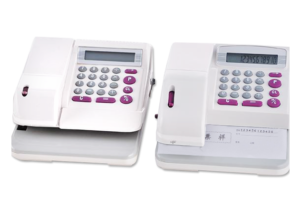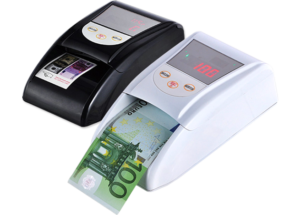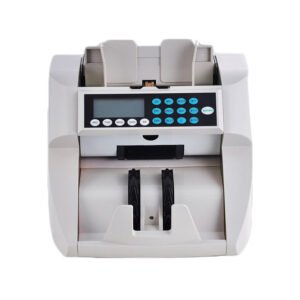
A banknote counter stopped at customs is rarely stopped because of the machine. It is stopped because of the paperwork behind it: a declaration of conformity that names the wrong directive, a test report from a laboratory nobody can accredit, an instruction manual with no importer address. The unit itself may be perfectly sound. It still sits in a bonded warehouse at your expense.
For distributors and bank procurement teams, this is the least glamorous part of buying cash handling equipment and the most expensive to get wrong. A tender can be lost on a missing page. A container can be delayed for weeks over a declaration signed by a trading company instead of the manufacturer. And when a central bank or a large retail group audits its suppliers, the compliance file is the first thing they ask for.
This guide separates three things that buyers routinely confuse: European product law, United States radio-frequency rules, and central bank approval for cash recirculation. They come from different authorities, answer different questions, and a machine can hold one of them without holding the other two.
Three approval systems, three different questions
The confusion starts with vocabulary. Suppliers describe every document as a “certificate”, which makes a self-declaration sound like a government licence.
Product law asks whether the equipment is safe to place on the market. In the European Union this is answered by the CE marking regime: the manufacturer assesses the product against the applicable directives, compiles a technical file, and signs a declaration of conformity. Nobody issues a CE certificate for a banknote counter, because no third party is involved in the standard route.
Central bank approval asks something narrower and more operational: can this machine type reliably separate counterfeit and unfit notes from genuine, fit ones, at production speed, without an operator deciding each case? The European Central Bank publishes a list of machine types that have passed testing by a national central bank. That list is not a safety mark, and it is not permanent.
Commercial acceptance asks whether the buyer will take the machine. Tender specifications, framework agreements with retail chains, and internal audit requirements all sit here. They often copy language from the first two systems without understanding either.
Keeping the three apart matters because the evidence you need differs in each case. A CE declaration will not satisfy a central bank cash department. An ECB test report will not satisfy a customs officer. And neither will save you from a tender clause that demands a document no manufacturer actually issues.
The European instruments that apply to a cash counter
A typical banknote counter or coin sorter sold into the EU touches four CE instruments, plus WEEE registration and, where a lithium battery is fitted, transport testing. The table below sets out what each one covers and what the buyer should receive as evidence.
| Instrument | What it covers on a cash handling machine | Evidence a buyer should hold | Timing note |
|---|---|---|---|
| Machinery Directive 2006/42/EC | Moving parts, feed rollers, guards, emergency stop, noise, instructions for use | Declaration of conformity citing the directive, technical file reference, risk assessment summary | Applies to units placed on the EU market before 20 January 2027 |
| Machinery Regulation (EU) 2023/1230 | Same scope, plus software and safety functions, cyber-related provisions, importer duties | Updated declaration citing the regulation, digital instruction set, revision-control records | Mandatory from 20 January 2027, with no transition period |
| EMC Directive 2014/30/EU | Conducted and radiated emissions, electrostatic discharge, immunity to mains disturbance | Test report from an accredited laboratory, declaration of conformity | Declaration is self-issued; the test report is the substance |
| Low Voltage Directive 2014/35/EU | Electrical safety of equipment rated 50–1000 V AC or 75–1500 V DC | Safety test report, usually to EN 62368-1, plus declaration | Applies to mains-powered units and to external adapters supplied with them |
| RoHS Directive 2011/65/EU | Ten restricted substances in the product, including the four phthalates restricted since 2019 | Material declarations, supplier declarations, test data for suspect parts | Cadmium is limited to 0.01%; the other nine to 0.1% by homogeneous material |
| WEEE Directive 2012/19/EU | Take-back and recycling obligations for electrical equipment | Producer registration number in each member state where stock is held | Not a CE matter, but customs and retailers increasingly ask for it |
Instrument map for EU placement of cash handling equipment. Source: European Commission, Machinery pages; RoHS Directive pages; directive texts as cited.
Two details in that table catch buyers out. The first is that the low-voltage safety report is often issued to the external power adapter rather than the machine, because many counters run on 12 V or 24 V DC. If your shipment includes a mains adapter, ask for the adapter’s report separately; the machine’s CE file may not cover it.
The second is WEEE. It is not part of CE marking, it is enforced nationally, and a distributor importing into three member states may need three registrations. Retail buyers in Germany and France now routinely ask for the registration number before listing a product.
RoHS is the instrument most often reduced to a sentence on a website. The RoHS directive restricts ten substances and applies per homogeneous material, not per product: a cable sheath, a solder joint and a display bezel are each assessed separately. That is why a supplier who cannot produce material declarations at component level is usually guessing about lead in brass fittings and cadmium in contacts, both common in older cash handling designs.
What changes on 20 January 2027
The Machinery Regulation replaces the Machinery Directive on 20 January 2027. There is no transition period: equipment placed on the market from that date must comply with the regulation, and equipment placed before it stays under the directive. The European Commission’s machinery pages state the application date plainly and note that manufacturers may already declare conformity with the regulation where it applies.
Four changes matter for cash handling equipment.
Digital instructions become normal. The regulation allows instructions for use and the declaration of conformity to be supplied digitally, with a paper copy on request. For a distributor this is convenient, but it shifts a burden onto you: you need a documented way to give end users the right revision in the right language, and you should expect auditors to ask how you do it.
Importers acquire duties they did not have. An importer placing a machine on the EU market must verify that the manufacturer has carried out the conformity assessment, that the technical documentation exists, that the marking and instructions are correct, and that storage and transport have not damaged compliance. In practice, this means a distributor who imports under its own name is no longer a passive reseller.
Substantial modification is now a defined concept. If a user or a reseller modifies a machine in a way that introduces new hazards, the modified unit can be treated as new machinery. Fitting an unapproved hopper extension or replacing a safety interlock is enough to raise the question.
Software with safety functions is in scope. Coin sorters rarely have safety-critical software, but models with automatic jam recovery, motor torque monitoring, or remote firmware updates now sit closer to the regulated edge. A sorter such as the DB380 coin counter and sorter is a mechanical device first, yet its jam sensors and motor control firmware fall inside the definition. Ask the manufacturer how the software is version-controlled and whether a firmware update triggers a reassessment.
None of this makes a 2026 shipment illegal. It does mean that a supplier who cannot describe the 2027 position in specific terms is likely to be unprepared for it, and your stock holding period may outlast their paperwork.
EMC and low-voltage testing in practice
The EMC file is where the gap between marketing language and engineering evidence is widest. “CE certified” appears on product pages for machines whose only EMC document is a one-page declaration with no test data behind it.
A usable EMC report has recognisable features. It names the standards applied, typically EN 55032 for emissions and EN 55035 for immunity on multimedia and information technology equipment. It lists the ports tested: mains input, any USB or serial port, the display cable harness. It records the worst-case operating mode, which for a counter means running at maximum throughput with the detection channels active, not idling. And it comes from a laboratory accredited to ISO/IEC 17025, with the accreditation number visible.
Immunity deserves as much attention as emissions, and gets far less. A counter that resets when a nearby fridge compressor starts, or that logs a false counterfeit when a staff member touches the hopper, has an immunity problem. In a bank branch with fluorescent ballasts, UPS units and radio equipment within a few metres, this is not a theoretical issue. Ask for the immunity test list, including electrostatic discharge contact and air discharge levels, and radiated immunity field strength.
The low-voltage file is more straightforward: a safety report to EN 62368-1 covering creepage distances, temperature rise, mechanical strength and abnormal operation. The detail worth checking is the rating on the label against the rating in the report. A machine tested at 220–240 V and shipped with a 110 V configuration is not the tested configuration, and the file no longer covers what is in the box.
United States: Part 15 Subpart B and the FCC ID myth
American compliance runs on a different logic. A banknote counter is a digital device that generates timing signals, so it falls under Part 15 Subpart B as an unintentional radiator. That subpart governs conducted and radiated emissions limits, and it is administered through a Supplier’s Declaration of Conformity rather than a certificate.
This is where a frequent procurement error appears. Buyers ask for an “FCC ID” on a product that does not need one. An FCC ID belongs to intentional radiators: Wi-Fi modules, Bluetooth transmitters, wireless sync dongles. A counter with no radio has no FCC ID, and a supplier who produces one for a non-radio machine has either misunderstood the rules or borrowed a number from another product. The governing text is 47 CFR Part 15 Subpart B, which is short enough to read in an afternoon and settles most arguments about what a supplier must provide.
The relevant question instead is: Class A or Class B? Class A limits apply to equipment marketed for commercial, industrial or business environments. Class B limits are tighter and apply to equipment used in residential settings, including devices that could be connected to a home network. A back-office counter used in a bank operations room sits naturally in Class A. A small counter sold to convenience stores and home offices, marketed for general use, is safer in Class B.
Two practical consequences follow. First, the FCC label and the compliance statement in the manual must match the class claimed, and the statement must be visible, not buried in a CD image. Second, the test report should reference ANSI C63.4 as the measurement method, because that is the procedure the rules assume.
For Canadian buyers, the equivalent is Innovation, Science and Economic Development Canada’s interference-causing equipment standard for digital apparatus, with its own labelling and French-language requirements. Mexican buyers should look for NOM certification, which is mandatory for many electrical products and is often the item missing from an otherwise complete file.
Great Britain runs a parallel regime. CE marking has been recognised for most goods placed on the GB market, and the UKCA marking guidance explains when the UK mark is required and when CE is accepted. Because Northern Ireland applies EU product rules under the Windsor Framework, a single shipment to the United Kingdom can require two different marking positions. Distributors serving both GB and NI should confirm the arrangement with their supplier in writing rather than assuming one label covers both.
Central bank approval is a separate system
The ECB’s framework is the clearest example of a scheme that has nothing to do with CE. Under Decision ECB/2010/14 and its amendments, euro banknotes may be recirculated only if they have been checked for authenticity and fitness. Notes that pass through customer-operated machines or cash dispensers must be checked by a machine type that a Eurosystem national central bank has tested successfully and that appears on the ECB’s published list. The common test procedures set out what each machine category must demonstrate.
The scheme is type-based, not unit-based. A national central bank tests a machine type against common procedures using collections of genuine and counterfeit notes, plus fitness test decks where applicable. Success produces a summary test report, not a certificate. Results are valid for one year from the end of the month of publication, and the manufacturer must re-test annually. A machine type that can no longer detect a newly discovered counterfeit class is removed from the list.
The classification matters when you write a specification, because the categories carry different obligations.
| Category | Typical machine | What testing must demonstrate |
|---|---|---|
| Cash-in machine (CIM) | Deposit-only terminal | Authenticity check, separation of suspect notes, tracing of deposited notes |
| Cash recycling machine (CRM) | Recycling ATM or teller cash recycler | Authenticity and fitness, plus recycling of previously deposited notes |
| Combined cash-in machine (CCM) | Deposit module that dispenses pre-loaded cash | Authenticity, separation, no recycling of customer deposits |
| Cash-out machine (COM) | Dispensing terminal | Authenticity and fitness before dispensing |
| Banknote processing machine (BPM) | Back-office high-speed sorter | Authenticity and fitness in one pass, with dedicated output stackers for each category |
| Banknote authentication machine (BAM) | Counter or desk-top verifier | Authenticity only, with reliable separation of suspect notes |
| Teller assistant machine (TAM/TARM) | Teller workstation | Authenticity, account crediting, and fitness where recycling is enabled |
Machine categories under the ECB recirculation framework. Source: European Central Bank, procedures for testing banknote handling machine types; Decision ECB/2010/14 as amended.
Three operational details are worth memorising. Suspect counterfeits must reach the competent national authority within 20 working days of processing. A BPM normally needs at least three dedicated output stackers to sort the defined categories without operator intervention, and reduced-stacker configurations carry conditions on re-running notes. And the machine must be adaptable enough to be updated when new counterfeit classes appear, which is why firmware support is a procurement issue rather than an afterthought.
For a distributor, the practical rule is simple. If your customer recirculates euro notes through a customer-operated machine or a cash dispenser, the machine type must be on the ECB list, and a CE declaration is irrelevant to that requirement. If your customer runs a back-office counter for internal reconciliation and does not recirculate, the ECB list does not apply, but the customer’s own audit team may still ask how authenticity decisions are made and recorded.
High-speed processing machines in the Eurosystem context handle up to 33 banknotes per second, according to ECB research on banknote quality. That figure is a useful benchmark when a supplier quotes throughput: a machine claiming 1,900 notes per minute is claiming roughly 31.7 notes per second, which is in the same range as central bank sorting equipment. Claims far above that deserve scrutiny of the feed mechanism, not just the motor.
Reading a specification sheet without being misled
Throughput is the number buyers compare and the number least standardised. Some suppliers quote the maximum motor speed with a single denomination, new notes, and a warm machine. Others quote a realistic mixed-denomination figure. A specification that says “1,000 notes per minute” without stating denomination, note condition and counting mode is a marketing number.
Four figures belong in any serious comparison.
- Counting speed by mode, since value counting and serial-number reading run slower than a plain count.
- Feed reliability, expressed as a jam rate per thousand notes or as a mean number of notes between jams, tested on circulated notes rather than new ones.
- False reject rate, the share of genuine notes diverted to the reject stack, which is what determines how much rework your operators do.
- Detection channels fitted, with the specific technologies named: ultraviolet, magnetic, infrared, magnetic thread, spectral or watermark imaging.

The fourth item is where product literature becomes vague. A machine described as having “six-point detection” may be counting size, thickness and double-feed as three of the six. That is not dishonest, but it is not equivalent to six independent authentication technologies. Ask for the channel list in writing.
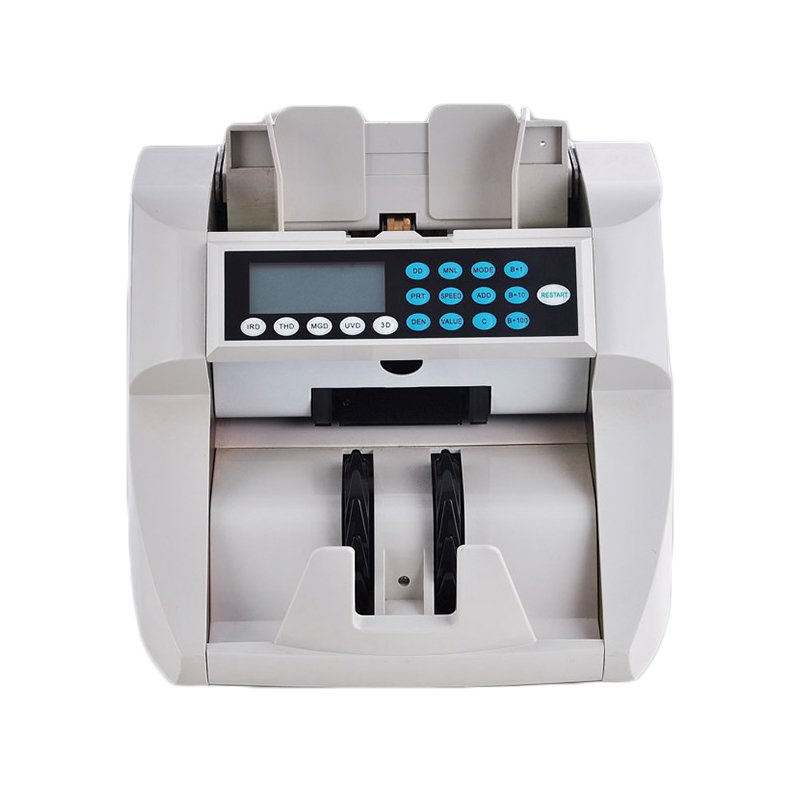
Dongbo publishes channel lists for its counter range, including the DB780A banknote counter, which combines UV, MG, IR, magnetic thread and MT-code checks with a printer output for reconciliation records. That combination is what a cash office actually needs: an audit trail that matches the machine’s decisions, not just a total on a display.
Where the market is heading, and why the paperwork matters more
Published market estimates for currency counting equipment diverge sharply, which tells you something about how the category is defined rather than about demand.
| Source | Base year value | Forecast | CAGR |
|---|---|---|---|
| Global Industry Analysts, via Research and Markets (2025) | USD 333.0 million (2024) | USD 431.5 million (2030) | 4.4% |
| Same study, BFSI segment | — | USD 231.6 million (2030) | 4.5% |
| QYResearch (2024) | USD 1,072.9 million (2024) | USD 921.7 million (2030) | −2.5% |
Two published estimates for the same product category. Source: Research and Markets / Global Industry Analysts, Currency Counting Machines global report, 2025; QYResearch, Currency Count Machine market report, 2024.
The gap is not a scandal. The two studies draw the boundary differently: one appears to count banknote counters sold through professional channels, the other includes coin handling and lower-cost OEM volume at factory-gate prices. The same study also puts the US market at USD 87.4 million in 2024 and projects China to reach USD 92.7 million by 2030 at a 6.7% annual growth rate.
What both agree on is that the installed base keeps renewing, and that renewal is increasingly driven by regulation and by counterfeit pressure rather than by pure replacement cycles. That is why the compliance file has moved from the back of the catalogue to the front of the sales conversation.
The document pack for a clean import
A complete file for a container of counters and sorters contains the following. Ask for it as a single indexed PDF, not as attachments spread across three email threads.
- Declaration of conformity, signed by a named person at the manufacturer, listing every directive applied and the standards used to presume conformity.
- EMC test report with laboratory accreditation details, standards, port list and worst-case operating mode.
- Safety test report to EN 62368-1, plus a separate report for any external power adapter.
- RoHS material declarations or test data, by homogeneous material, for the housing, harness, PCB and display.
- Machinery risk assessment summary and the instruction manual in the languages of the destination market.
- For the US, the Supplier’s Declaration of Conformity, the Class A or B statement, and the ANSI C63.4 test report.
- For units with a lithium battery, UN 38.3 transport test summaries and the applicable packing instruction reference.
- WEEE registration numbers for each member state where stock will be held, where applicable.
- A revision and date on every document, because an undated declaration is treated as unverified.
Two of these items are commonly missing on Chinese-origin equipment: the separate adapter report and the battery transport summary. Neither is exotic. Both are routine to obtain from a manufacturer that builds for export as a matter of course, and both are a warning sign when refused.
Questions that expose a weak supplier
The fastest way to assess a supplier’s compliance maturity is to ask questions that cannot be answered with a brochure.
Ask which laboratory performed the EMC test and for its accreditation number. Ask whether the declared standards are the current versions and when they were last reviewed. Ask who signs the declaration of conformity and what their role is in the company. Ask how a firmware change is handled: does it trigger a new assessment, and is the change recorded against the technical file?
Then ask the operational question. If a new counterfeit family appears in your market next quarter, what is the update path, how long does it take, and who pays for the field update? A manufacturer with a genuine engineering team answers in days. A trading company forwards the question to someone else.
Dongbo’s position as an OEM supplier is that the technical file is part of the product, not an accessory: declarations, test reports and channel lists are issued per model and per market, and the customer’s name can appear on the label and the manual under an OEM agreement. For buyers comparing manufacturers, that distinction is worth more than a lower unit price. This guide to evaluating money counting machine manufacturers sets out the rest of the screening criteria.
What to put in the purchase order
Compliance fails at the order stage more often than at the design stage, because the PO says “CE approved” and nothing else. Six clauses close most of the gap.
- Name the instruments, not the mark. Require the declaration of conformity to cite Machinery Directive 2006/42/EC (or Regulation 2023/1230 for deliveries after January 2027), EMC 2014/30/EU, LVD 2014/35/EU and RoHS 2011/65/EU explicitly.
- Attach the test reports as a delivery document. Make the EMC and safety reports, with accreditation numbers, part of the shipping documents rather than a later request.
- Specify the destination market configuration. Voltage, plug type, language of the manual, and the Class A or Class B statement for the US must be fixed in the order, not left to the factory default.
- Fix the firmware revision. State the revision shipped and require written notice of any change, with the change described against the tested configuration.
- Define the update obligation. For machines with authentication functions, require a documented update path and a stated response time when new counterfeit classes are identified.
- Reserve the right to audit the file. A clause allowing you to request the technical file, or a redacted version, within ten working days changes how the supplier prepares it.
A distributor who puts those six clauses into a standard purchase order will still meet suppliers who cannot comply. That is the point. The file is cheaper to demand than to discover at the port, and far cheaper than to explain to a bank’s procurement committee after the contract has been signed.
For the maintenance side of the same relationship, including service levels and spare parts commitments that keep a compliant fleet running, see this guide to B2B cash handler maintenance programs. Compliance gets a machine through the border; service keeps it in service.